Long-overdue trip to Europe – Part 1
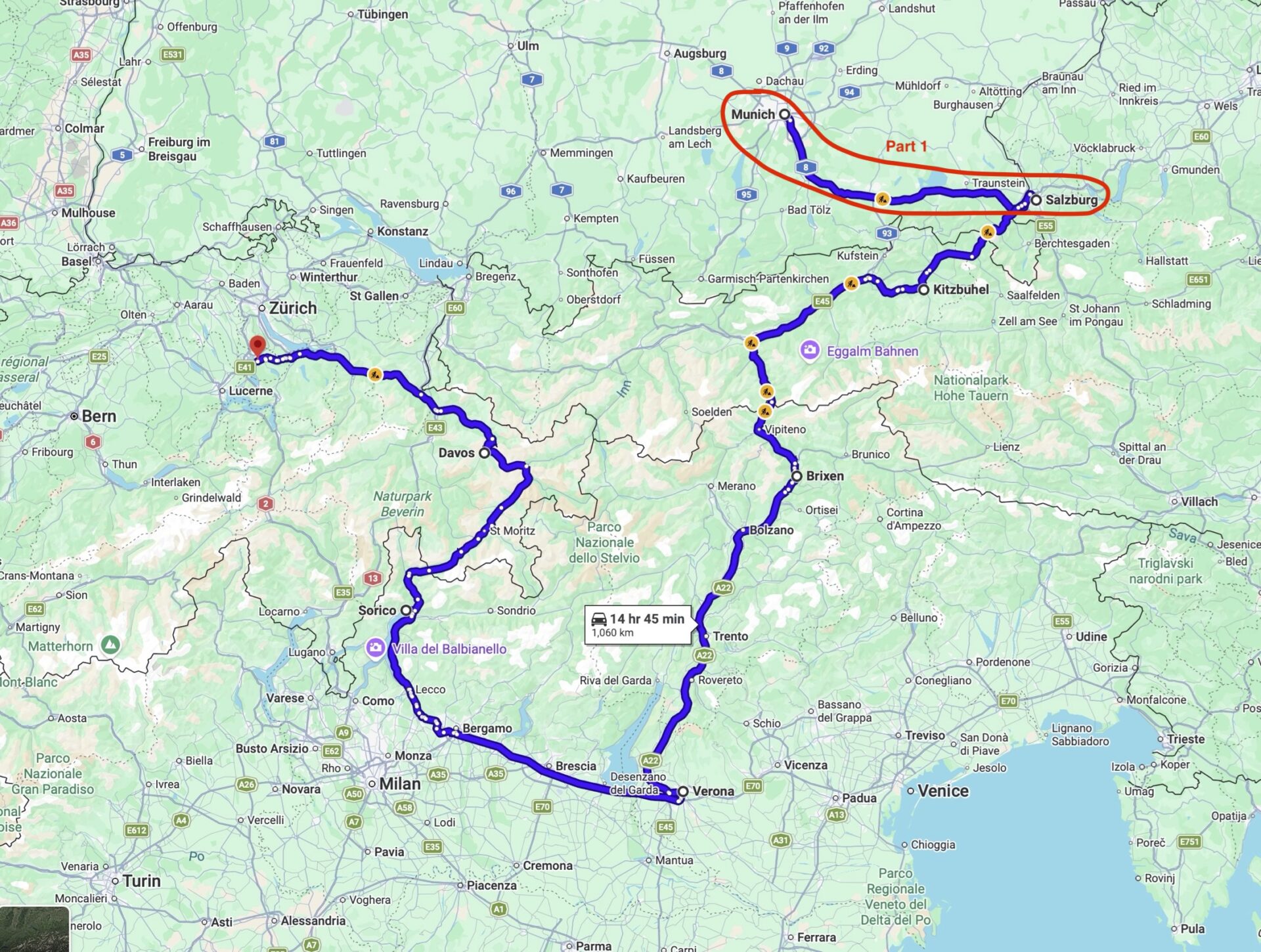
Munich & Salzburg (Part 1)
After a smooth flight we landed in Munich and picked up our car for the trip. For me it was a very long time ago I was last time here. For Cindy it was the first time.
Munich: History, Beauty, and the Life of the City
Munich is a city of contrasts. During our visit, we moved from one of the darkest chapters of German history at the Dachau Concentration Camp Memorial Site to the lively streets and beautiful squares of the Old Town. We wandered through car-free streets (wouldn’t it be nice if we could have this here as well? Even in Santa Fe), visited the enormous Deutsches Museum, and ended up, naturally enough, at the famous Hofbräuhaus.
What struck us most was how easily Munich moves between its past and its present.
Dachau — a place that stays with you
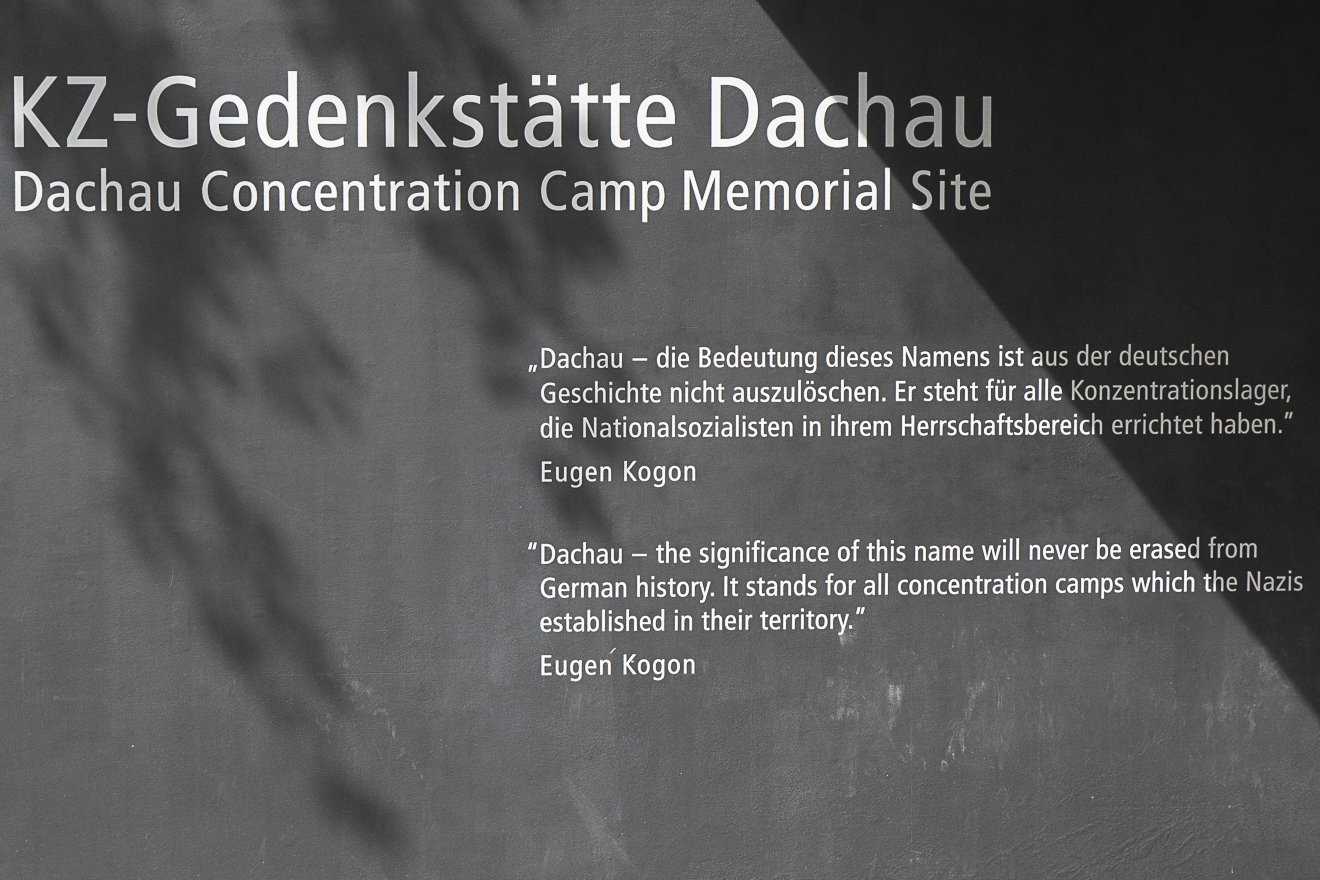
Our visit to the Dachau Concentration Camp Memorial Site was very different from the rest of our time in Munich, and in fact our entire trip.
The memorial stands on the grounds of the former concentration camp, and the experience is educational and reflective. The site includes the former camp grounds, reconstructed barracks, the main exhibition, memorials, and the crematorium area.
Dachau is a place to listen, look, and remember.
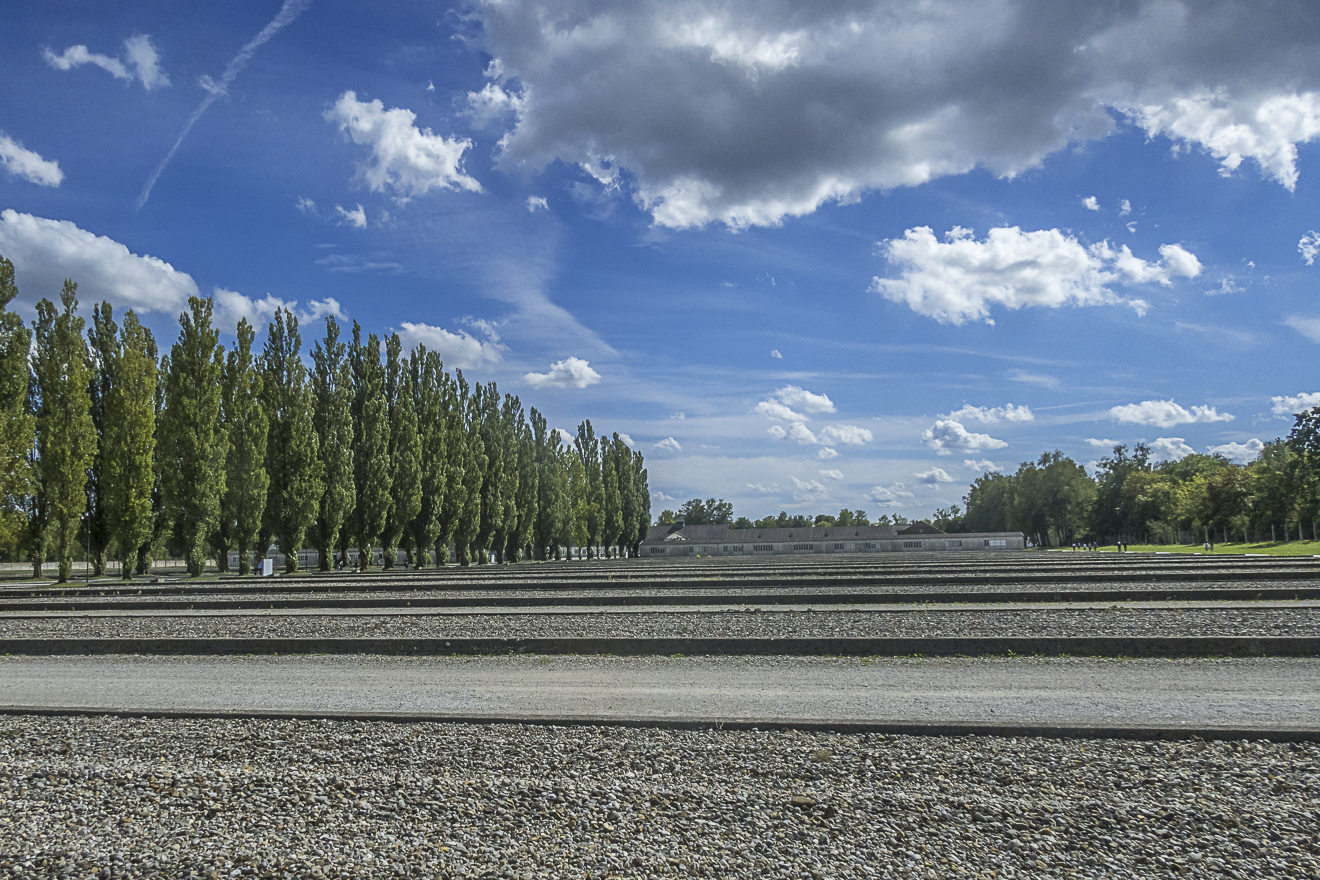
The history is overwhelming, but seeing the actual grounds makes that history more immediate. The memorial also places considerable emphasis on the individual prisoners and their experiences, rather than allowing the enormous numbers to become an abstraction.
Don’t rush through it. There is a lot to absorb. We had an incredible sensitive Docent who was able to tell the story how it was with the inside of today.
Back to Munich: the Old Town
After Dachau, returning to Munich felt almost surreal. The city was bustling, people were shopping and having coffee, and the streets were filled with the ordinary business of everyday life.
And that’s one of the things I enjoyed about Munich: so much of the historic center is designed for people rather than cars.
Munich’s main pedestrian area runs from Karlsplatz-Stachus through Neuhauserstrasse and Kaufingerstrasse to Marienplatz. It was created for the 1972 Olympic Games and was one of Germany’s earliest major car-free shopping areas.
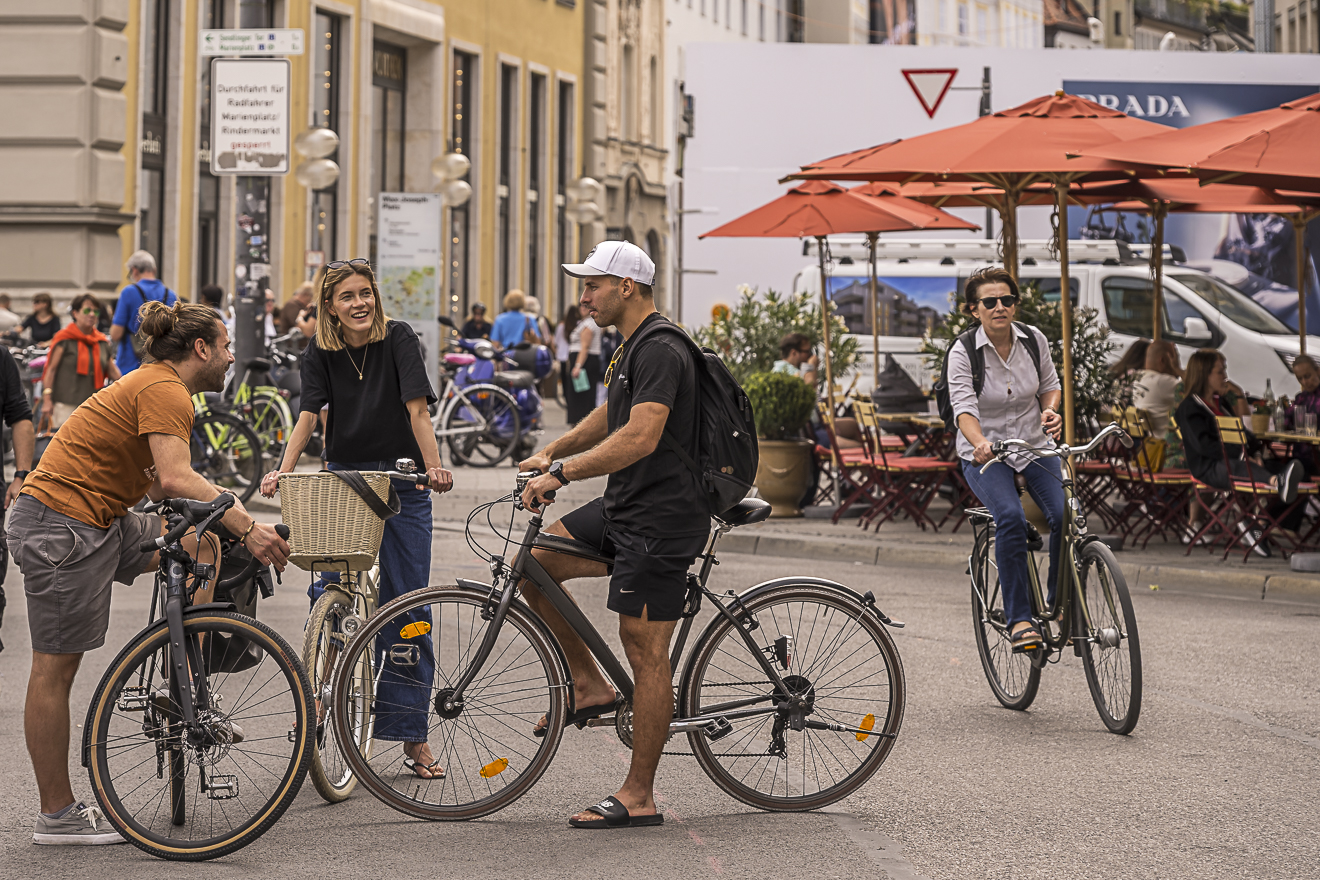
Walking here is completely different from walking through a typical busy city center. You can look up at the buildings, stop for a coffee, browse a shop, or simply watch people without constantly thinking about traffic.
And then you arrive at Marienplatz.
Marienplatz — the heart of Munich
Marienplatz has been the center of Munich since the city’s founding in 1158. Today it is dominated by the magnificent Neues Rathaus, with its famous Glockenspiel (since 1909).
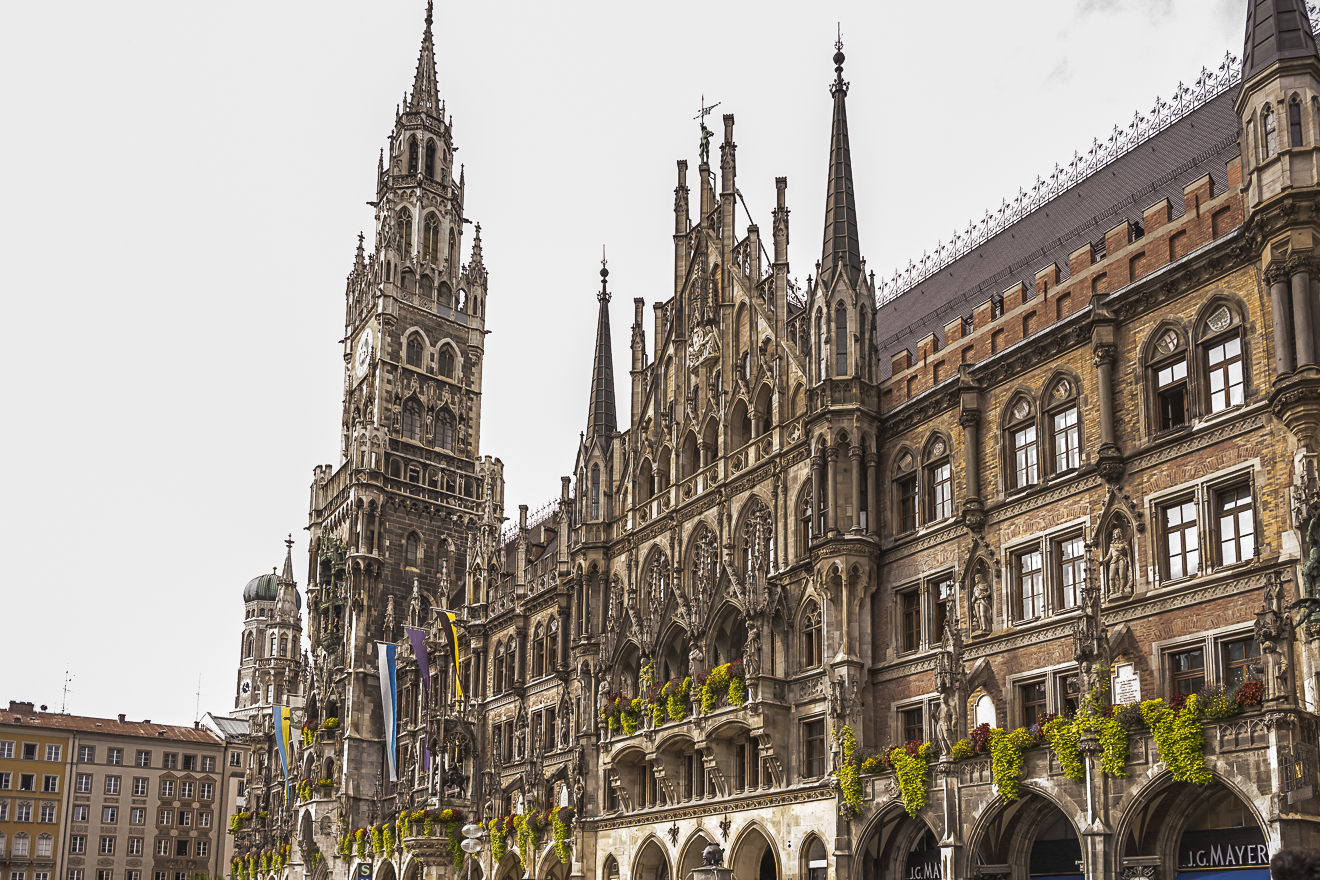
The square is a wonderful place to simply sit for a while.
There are people coming and going in every direction, tourists taking photographs (including me 😉), locals meeting friends, and visitors looking up at the Rathaus tower waiting for the figures of the Glockenspiel to appear.
And just a few steps away is the Theatinerkirche (late 17th century), whose distinctive twin towers appear again and again as you walk through the Old Town.
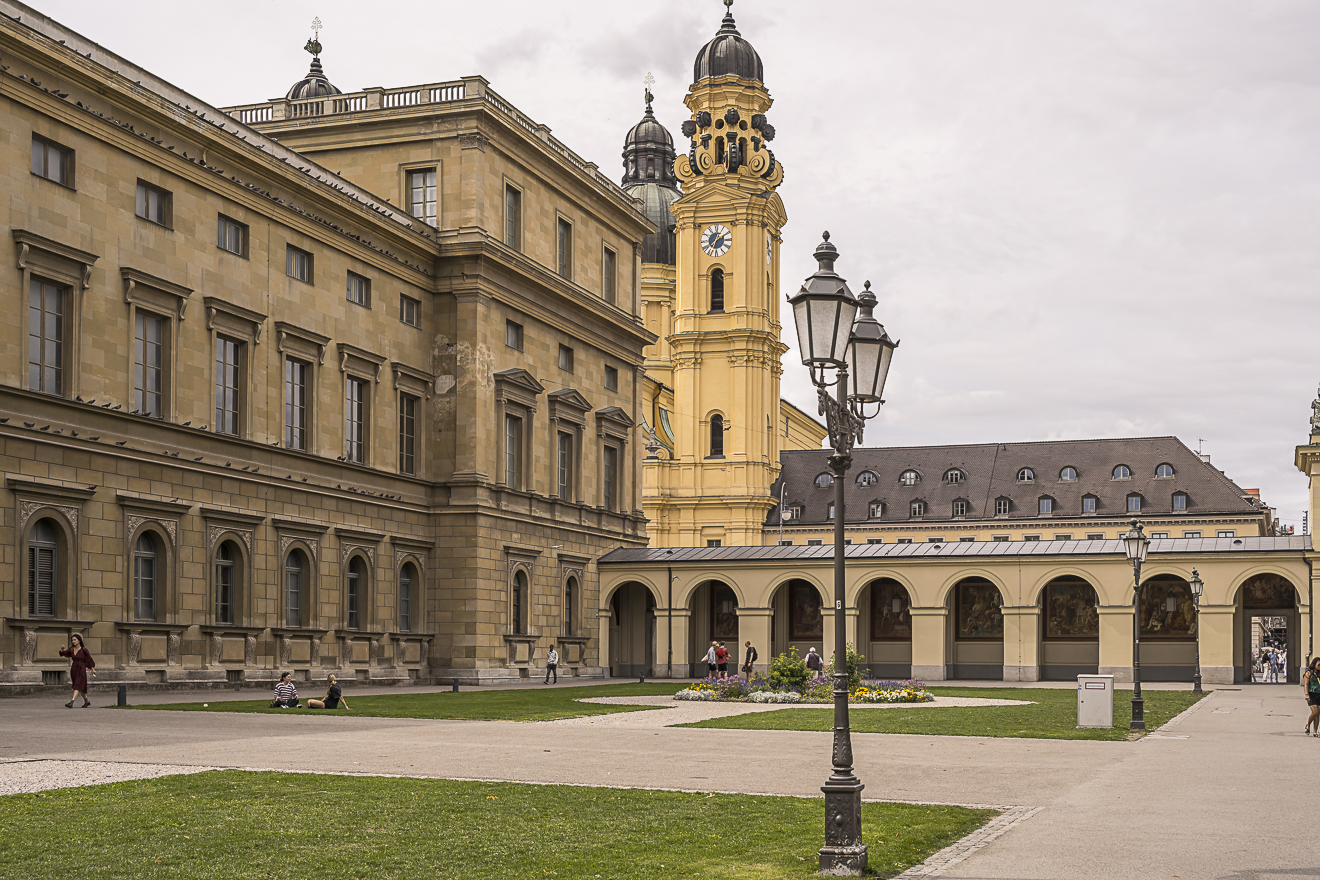
The open spaces of the Old Town
One of my favorite things about Munich was that the Old Town didn’t feel like one continuous mass of buildings.
There are squares, markets, courtyards, church plazas and little places to stop.
Viktualienmarkt is particularly fun to wander through, with its food stalls and outdoor atmosphere. And from Marienplatz, many of the city’s other important sights are within walking distance—including the Frauenkirche, Residenz and Hofbräuhaus.
Munich’s pedestrian areas also make wandering feel effortless. You can start at Karlsplatz and simply walk toward Marienplatz, with plenty to see along the way. The entire route is only about a kilometer.
The Deutsches Museum
Then there was the Deutsches Museum.
This is not a museum you casually “pop into.” It is enormous—and fascinating.
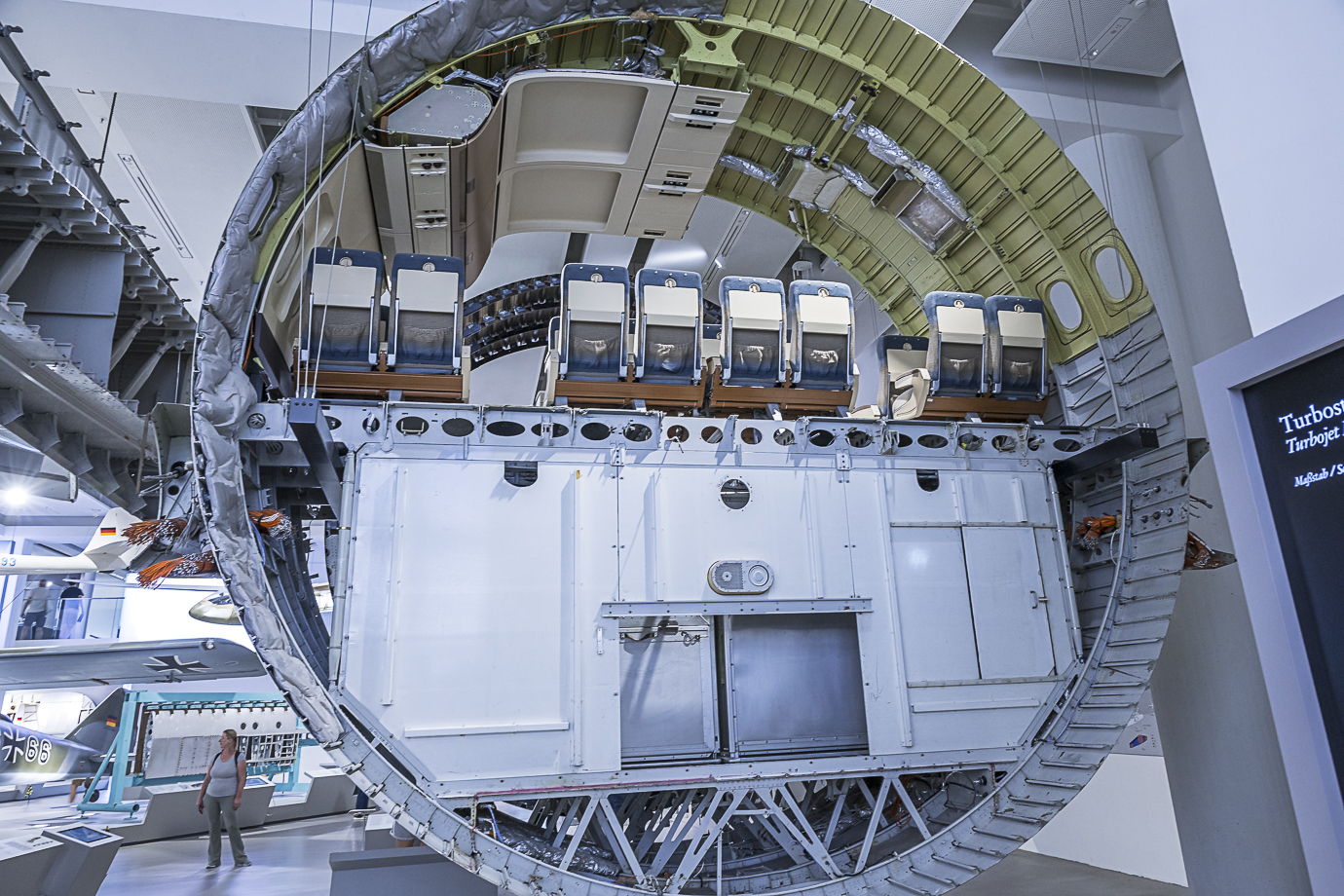
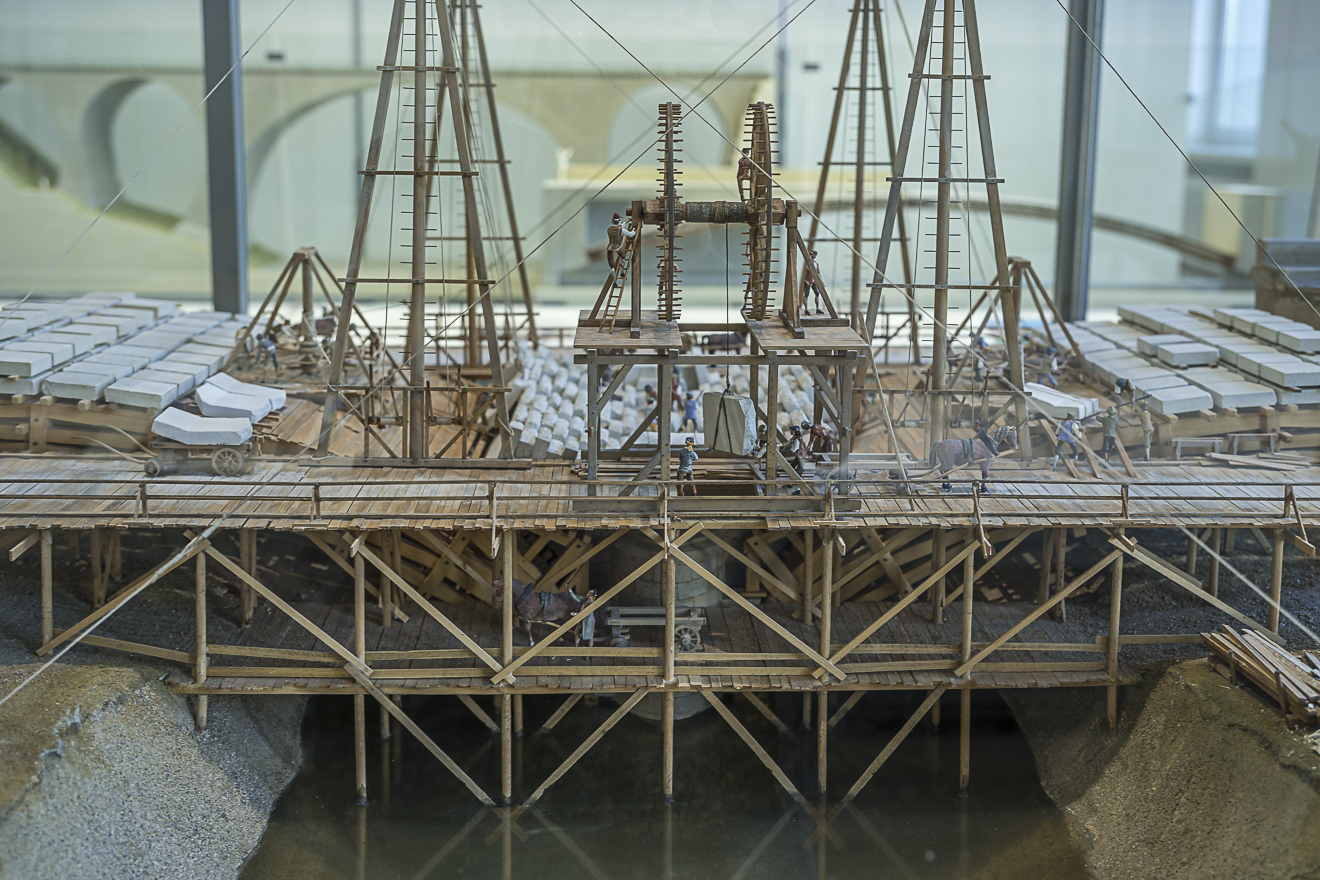
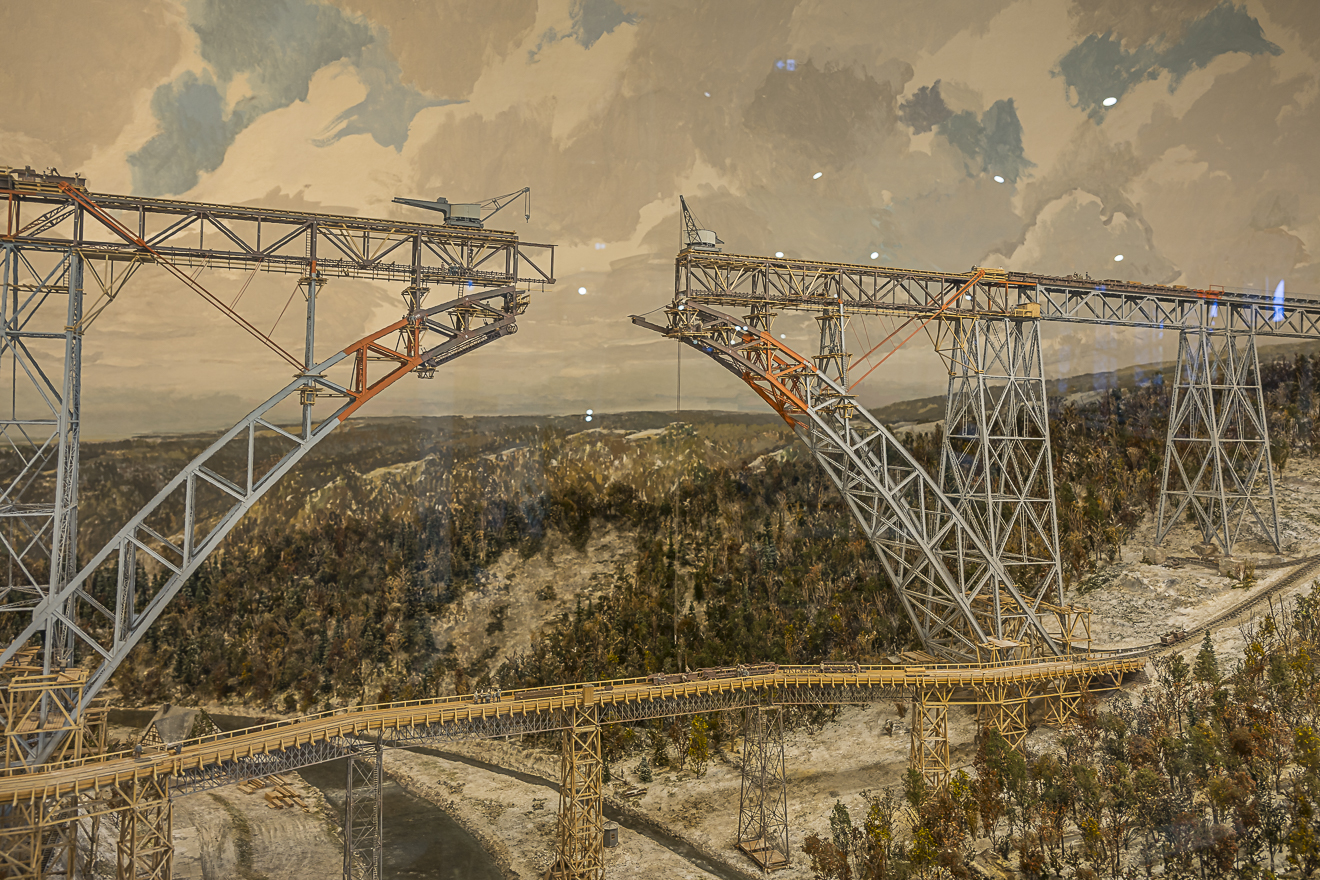
The museum is devoted to science and technology, with exhibitions covering an enormous range of subjects. It is the kind of place where you can keep discovering something you didn’t expect around the next corner.
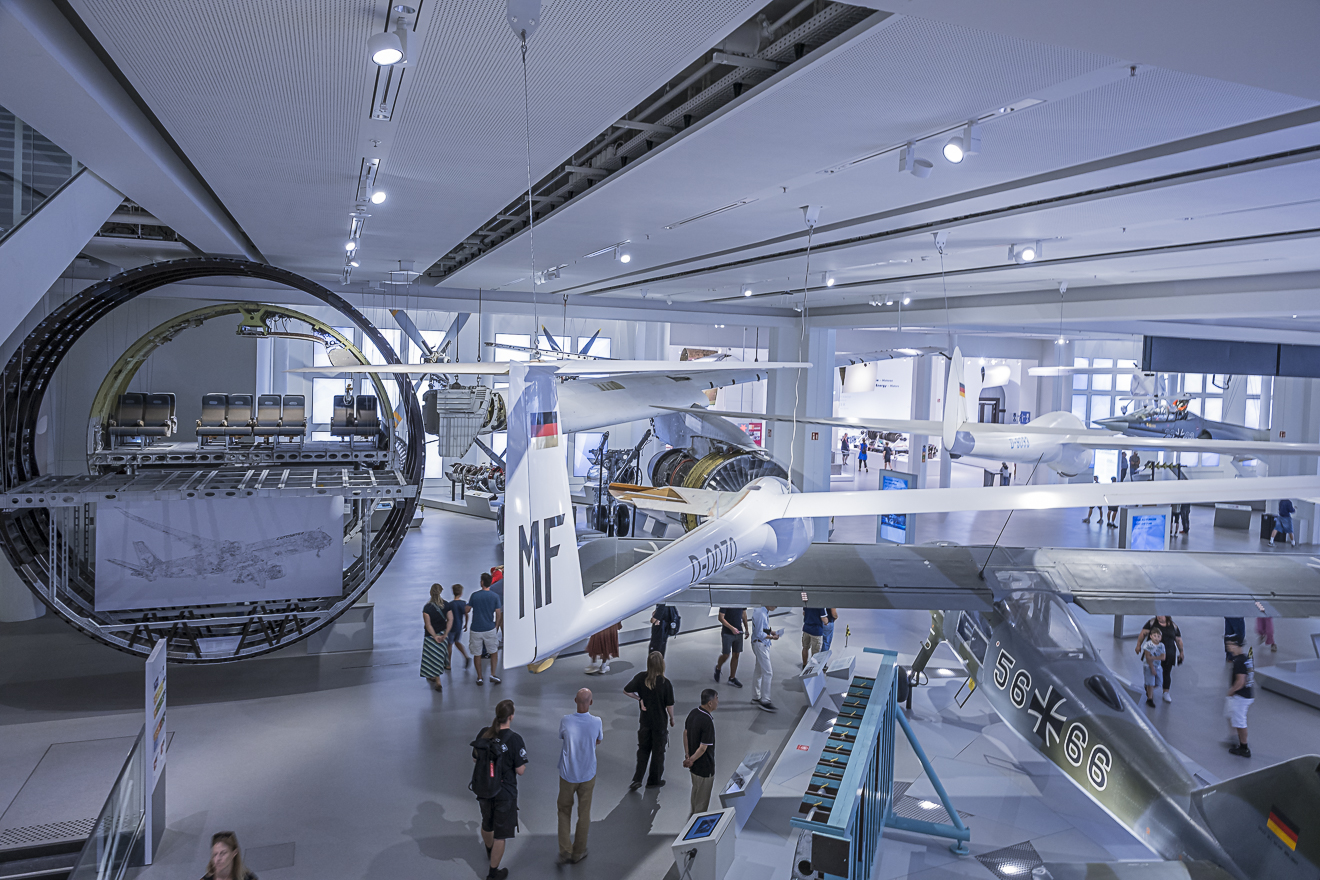
For me, it was a nice counterpoint to the historical experience at Dachau. Instead of looking backward at one of Germany’s darkest periods, here we were looking at human curiosity, invention and scientific achievement.
Hofbräuhaus — the Munich everyone imagines
And then there is the Hofbräuhaus.
Hofbräuhaus München is about as recognizable a Munich experience as you can get.
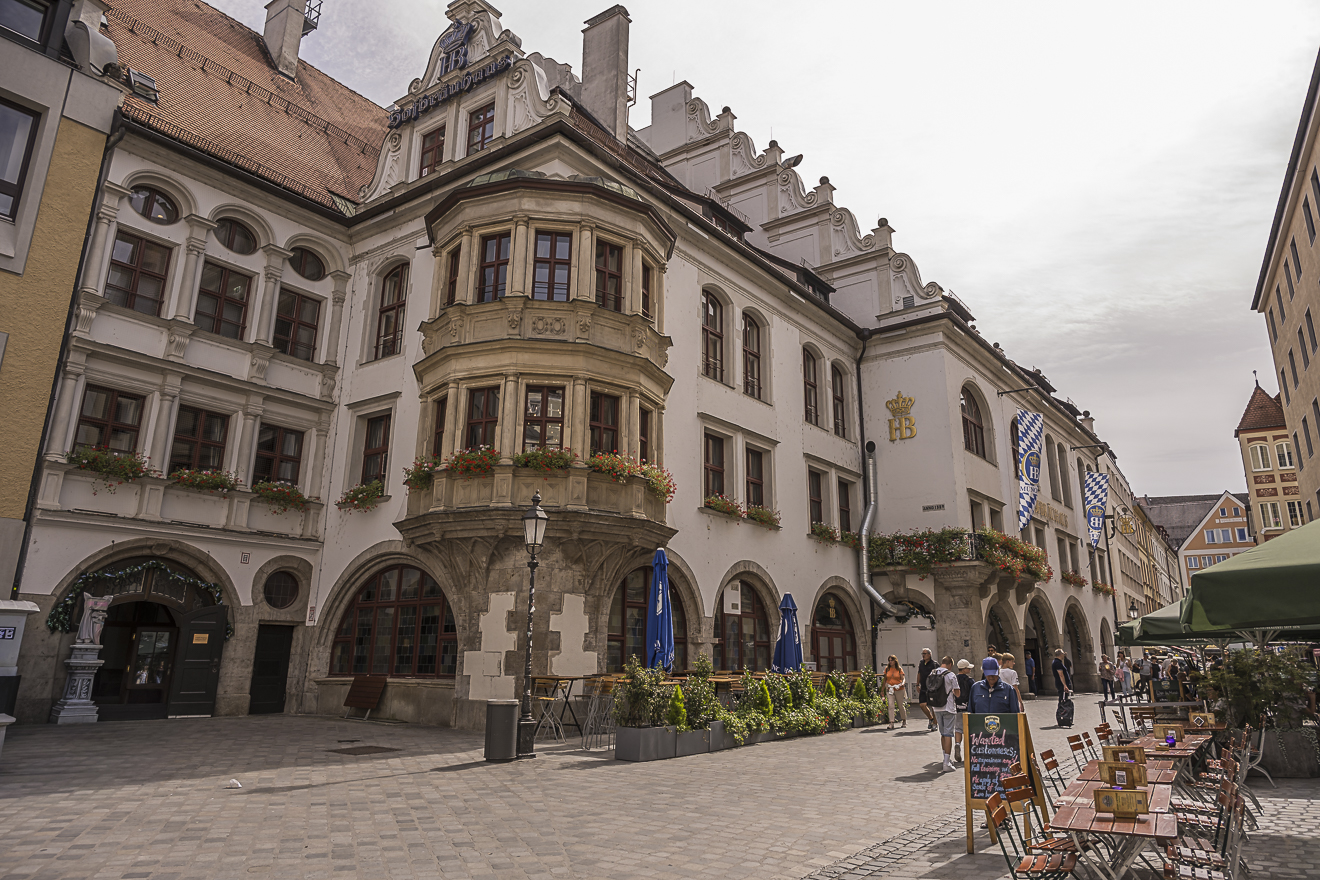
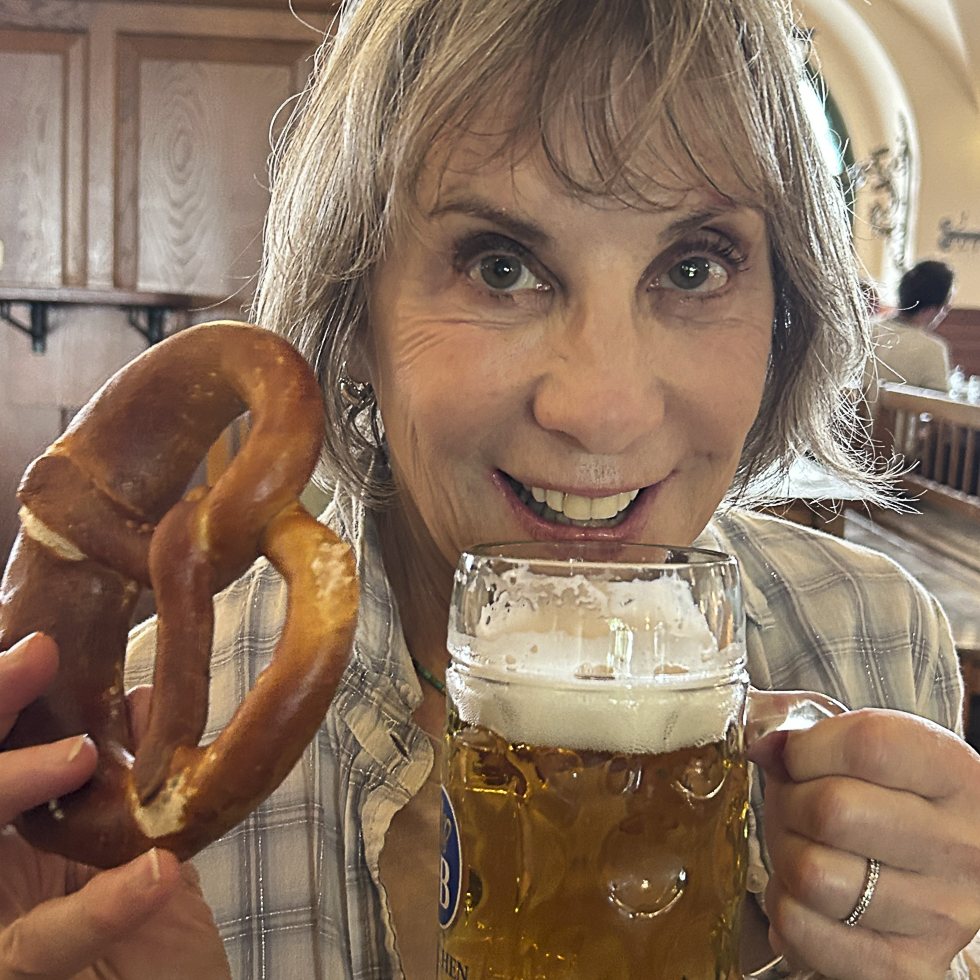
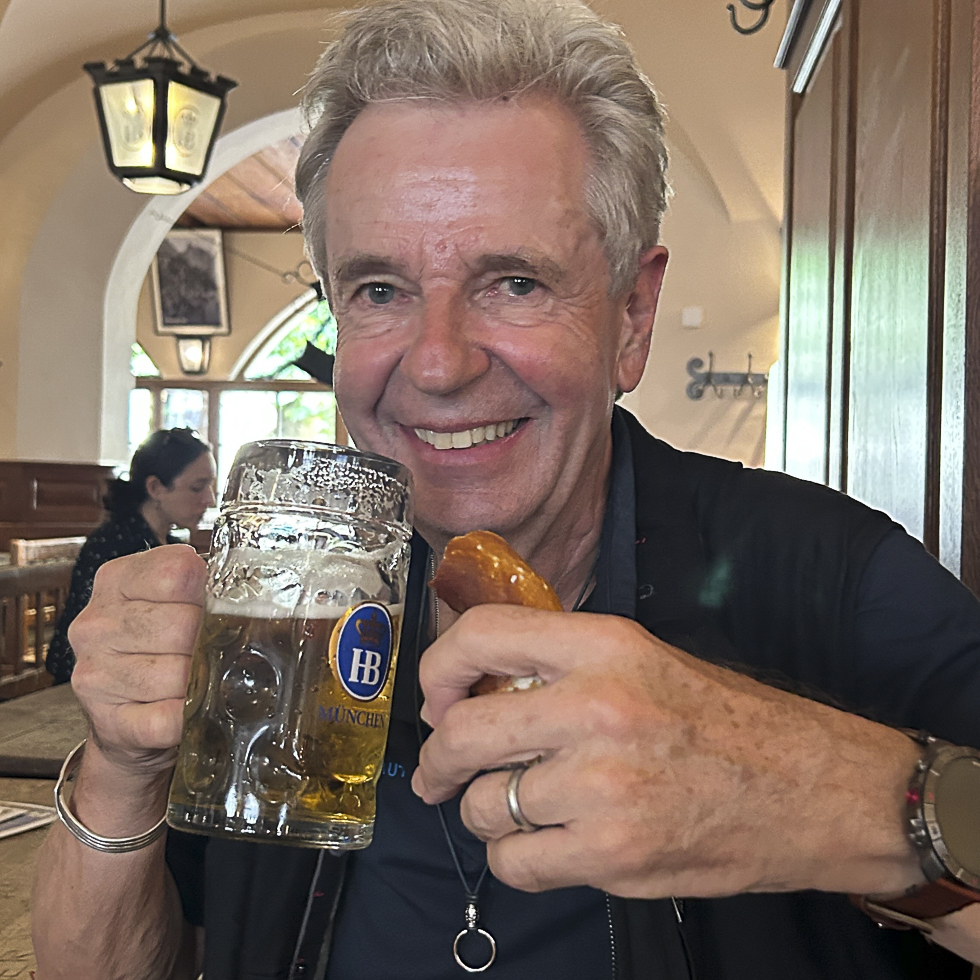
Inside, it is big, noisy and lively. There are long communal tables, Bavarian food, enormous beer glasses and traditional music.
It is definitely touristy—but that is part of the fun.
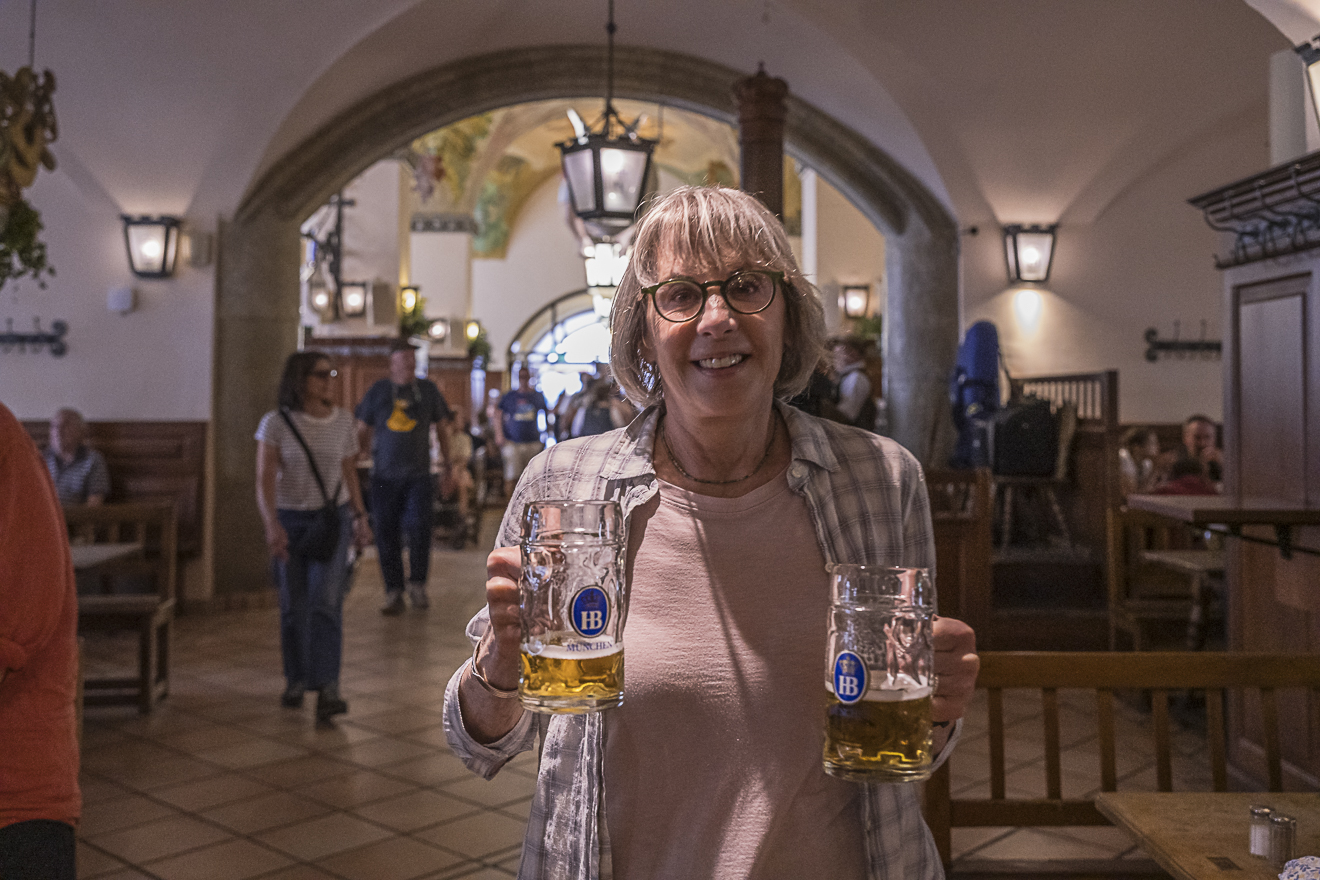
After a day of museums and history, there was something wonderfully uncomplicated about sitting down, having something to eat, listening to the music and watching the room around us.
This was Munich at its most exuberant.
What I remember most about Munich
What stayed with me wasn’t one particular building or museum.
It was the contrast.
A concentration camp memorial where the past is impossible to ignore.
A modern city that has deliberately made much of its historic center accessible to pedestrians.
Beautiful churches and centuries-old buildings alongside modern shops.
Quiet corners and busy squares.
A world-class science museum and, not far away, a giant traditional beer hall.
Munich seemed to understand that a city doesn’t have to choose between remembering its past and living fully in the present.
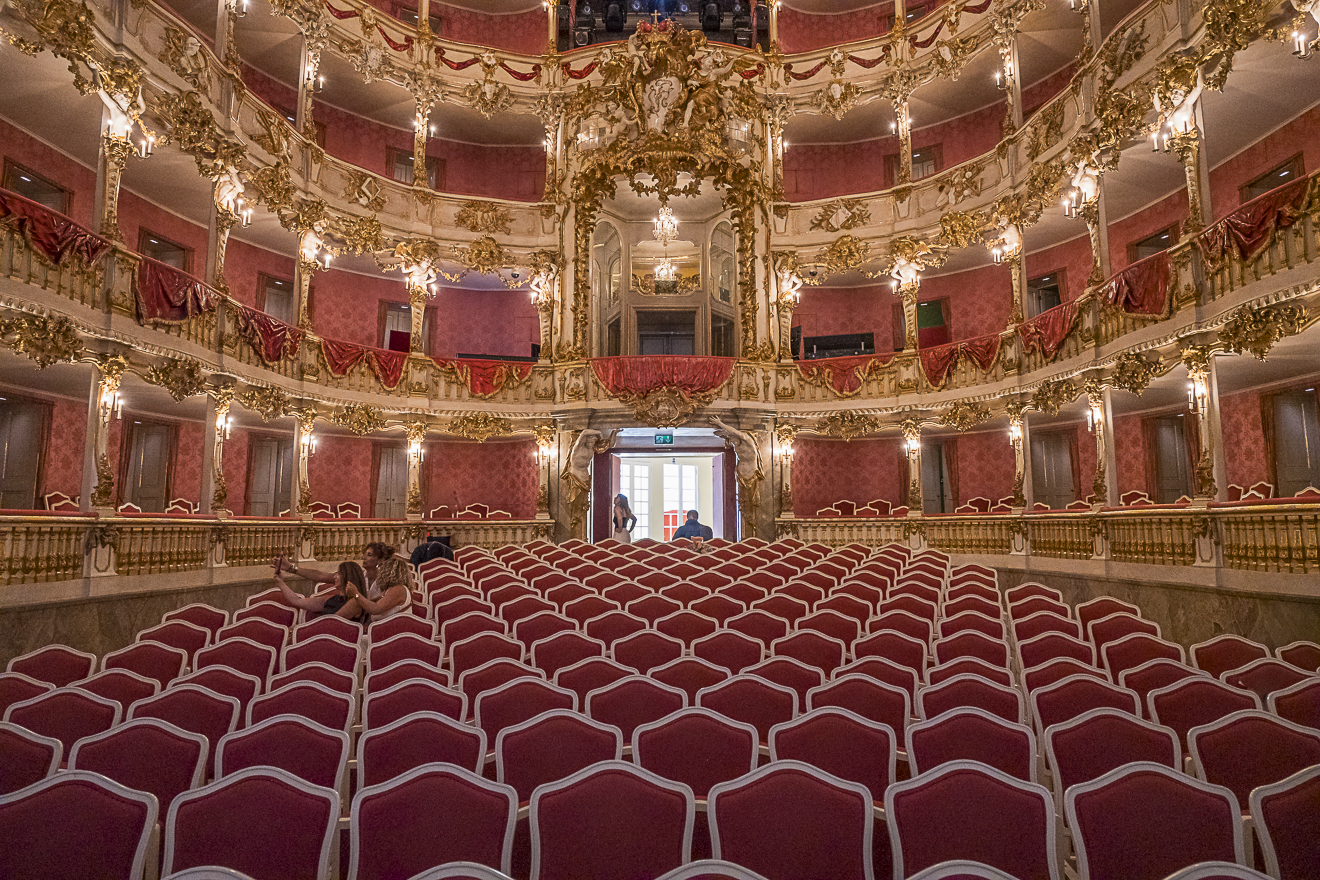
And perhaps that’s what I will remember most: walking through Munich, looking around, and realizing how much history can exist alongside ordinary, everyday life.
Salzburg: A Day Above the City
Leaving Munich, we drove south toward Salzburg. It was a beautiful change of scenery—the city gradually giving way to the countryside and, eventually, the mountains.
Salzburg felt immediately different from Munich. Smaller, more intimate, and almost impossibly picturesque.
And then we discovered where we were staying.
Our hotel above Salzburg
Our hotel was high above the city on the Mönchsberg.
Getting there was part of the experience.
Instead of driving up the mountain, we entered an elevator in the heart of the Old Town. The Mönchsberg Lift carries passengers inside the rock of the mountain, climbing 60 meters in about 30 seconds.
It was almost magical.
One minute we were down in the busy streets of Salzburg. A few moments later, we emerged high above the rooftops.
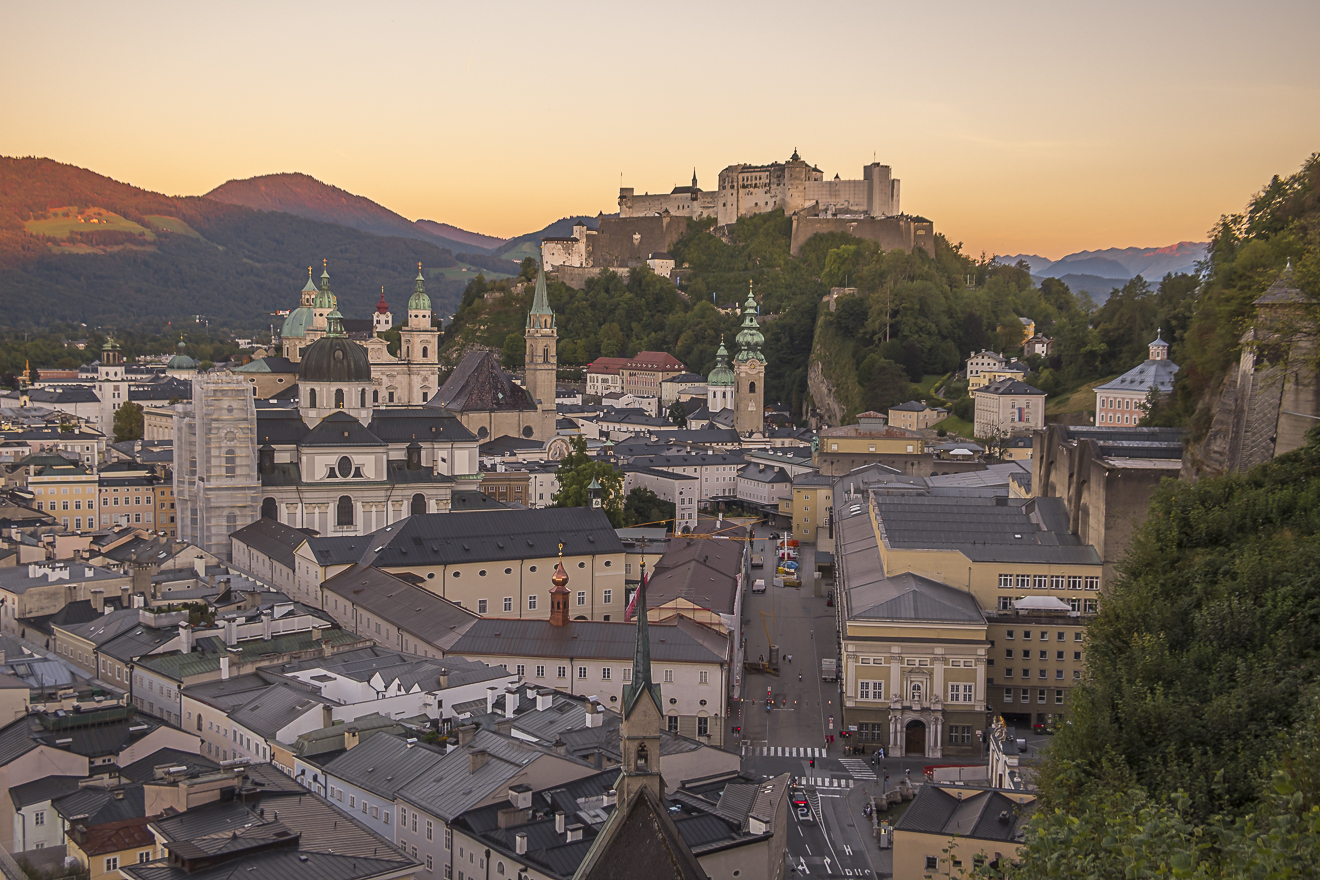
Our hotel, Hotel Schloss Mönchstein, sits in a private park on the Mönchsberg. It really does feel like a little castle above the city. The hotel has only 24 rooms and suites, and its position gives it spectacular views across Salzburg and toward the fortress.
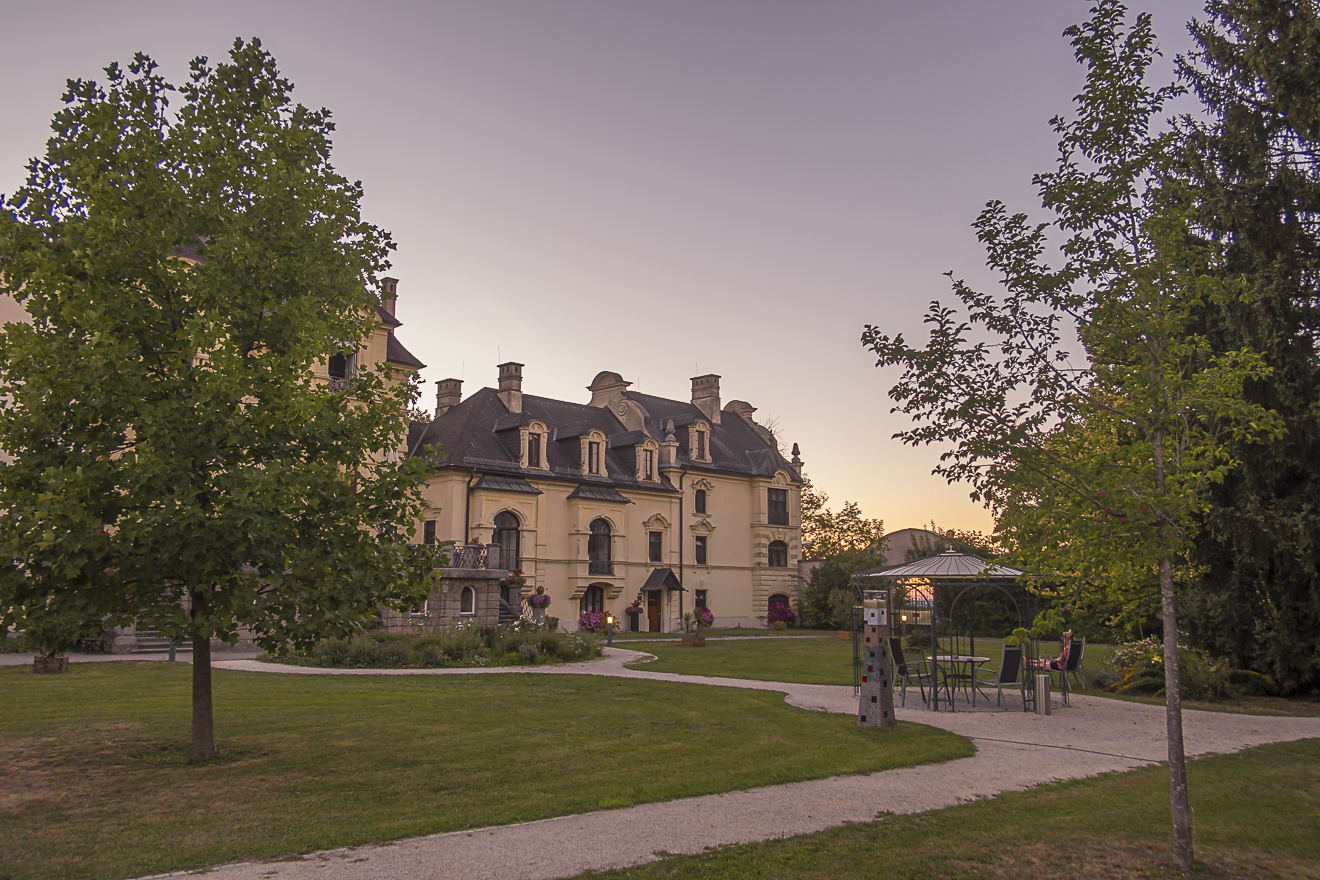
I loved the feeling of being removed from the activity below while still being only minutes from the center.
And, of course, there was that view.
Salzburg’s Old Town
Coming back down the mountain, we were immediately in the middle of Salzburg’s historic center.
The Old Town is wonderfully walkable, with narrow streets, old buildings, beautiful squares and passageways that seem to invite you to explore without any particular destination.
One of the things I noticed was how much life takes place outdoors. Cafés spill into the streets, people gather in the squares, and the historic buildings provide a spectacular backdrop for ordinary everyday life.
Then there is Getreidegasse, probably the most famous street in Salzburg.
The elaborate wrought-iron signs hanging above the shops are almost as recognizable as the buildings themselves.
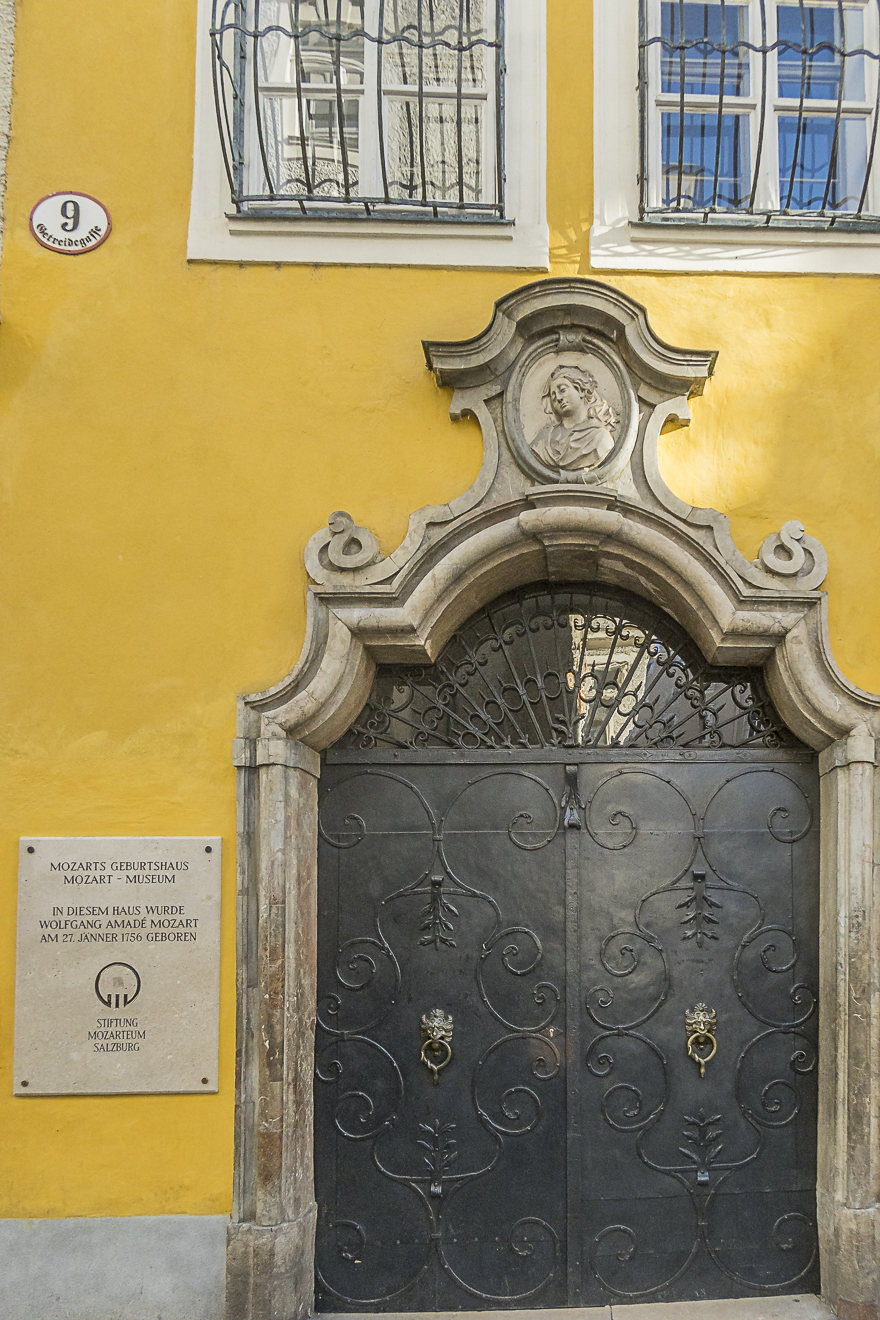
And somewhere along here is Mozart’s birthplace, another reminder that Salzburg’s history isn’t simply something preserved in museums—it is woven into the city itself.
The view that defines Salzburg
But for me, Salzburg is really about the combination of city and mountains.
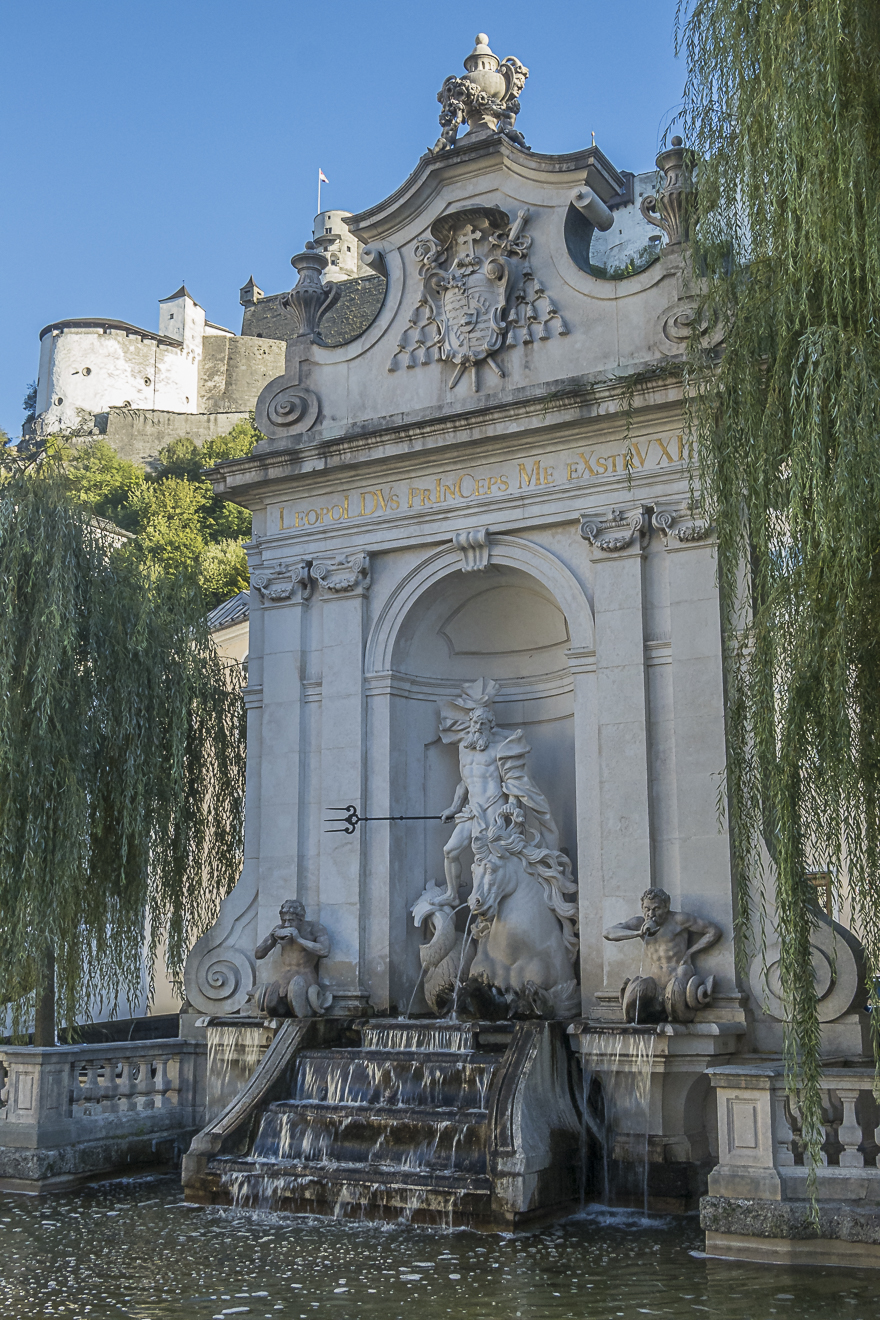
From the Mönchsberg, the whole city seems to spread out below you, with the Salzach River, the Old Town rooftops and the fortress rising dramatically above everything.
The Mönchsberg itself is much more than a viewpoint. There are walking paths through the green landscape, and the mountain is home to the Museum der Moderne as well.
I could have stayed there for hours.
One day in Salzburg
We only had a day and a night, which wasn’t nearly enough.
But perhaps that’s part of the charm of a short visit. We didn’t try to see everything. We walked, looked, ate, photographed and simply enjoyed being there.
After the intensity of Dachau and the busyness of Munich, Salzburg felt like a pause.
Beautiful architecture.
Mountains surrounding the city.
The river running through it.
And the remarkable experience of being able to ride an elevator through a mountain to get home.
Leaving Salzburg
The next morning, we had to leave.
I remember thinking that Salzburg was one of those places where you can understand why people return.
There was still so much we hadn’t seen.
But perhaps that is better than trying to check every box on a sightseeing list.
We had seen Salzburg from below—and from high above it.
And for one day and one night, that was enough to leave us wanting more.
Click Image to View Slideshow
[caption id="attachment_10139" align="alignnone" width="600"]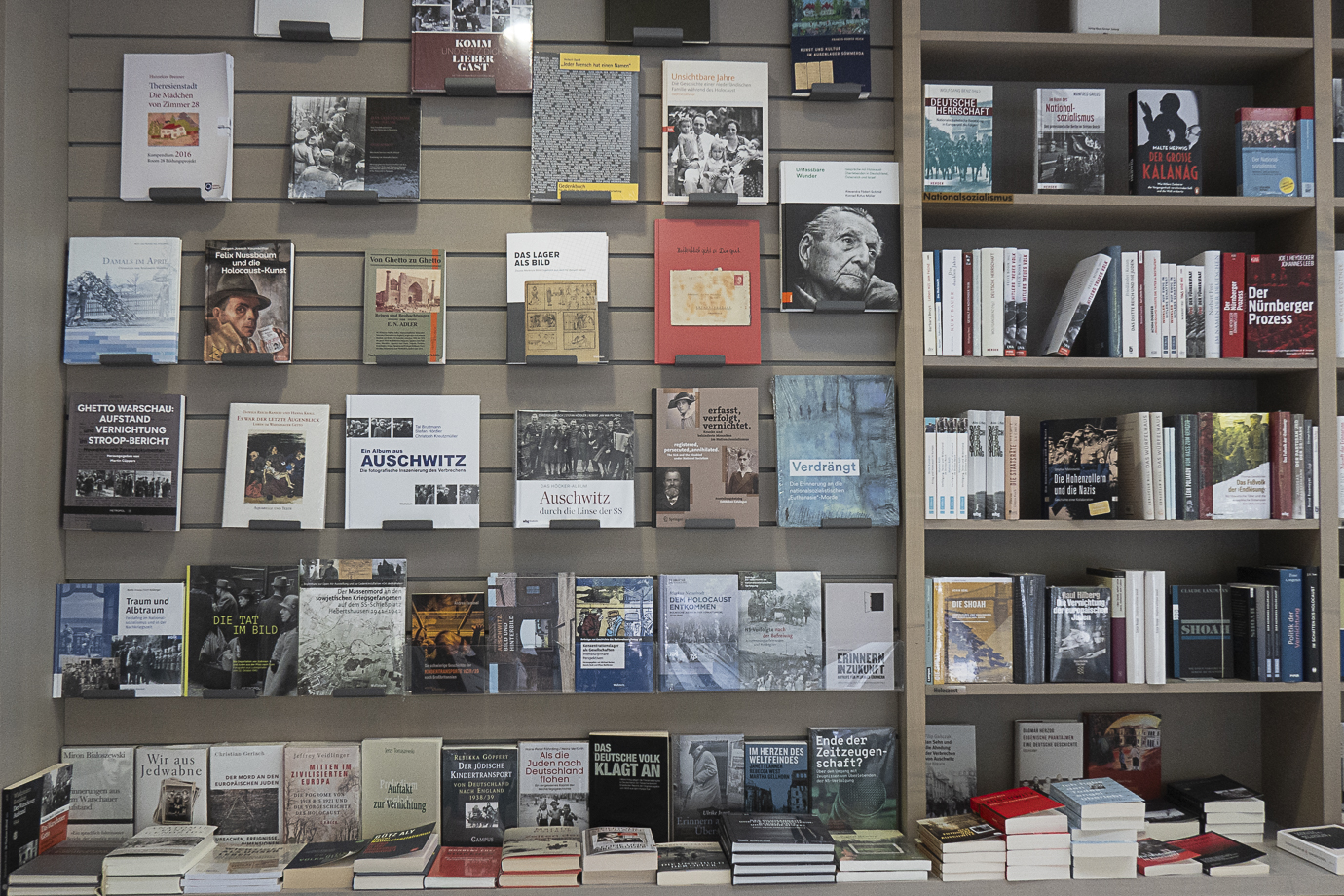 The Germans don’t hide their dark history. The government does not take down signs or bans book (not like in the USA)[/caption]
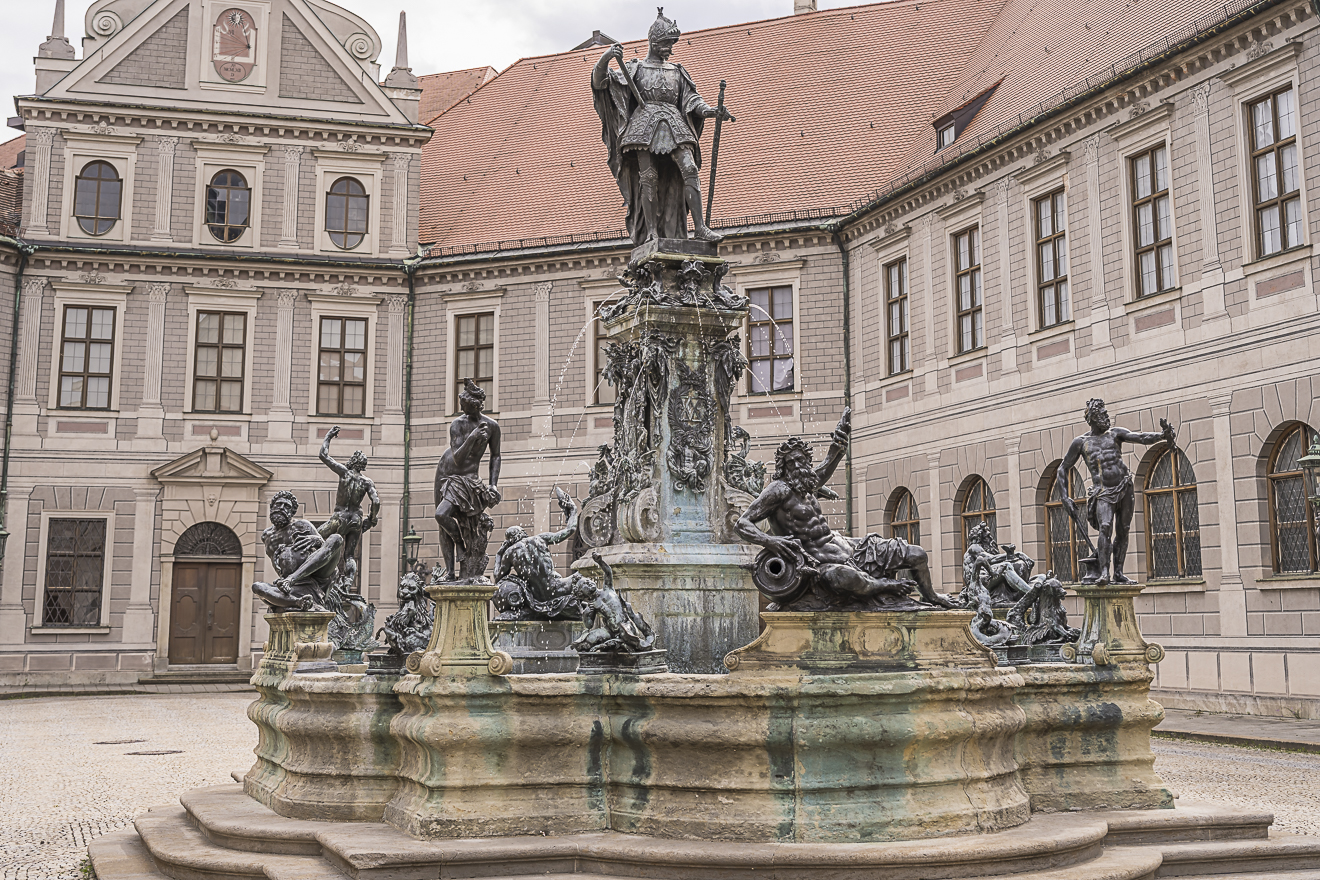
[caption id="attachment_10026" align="alignnone" width="600"]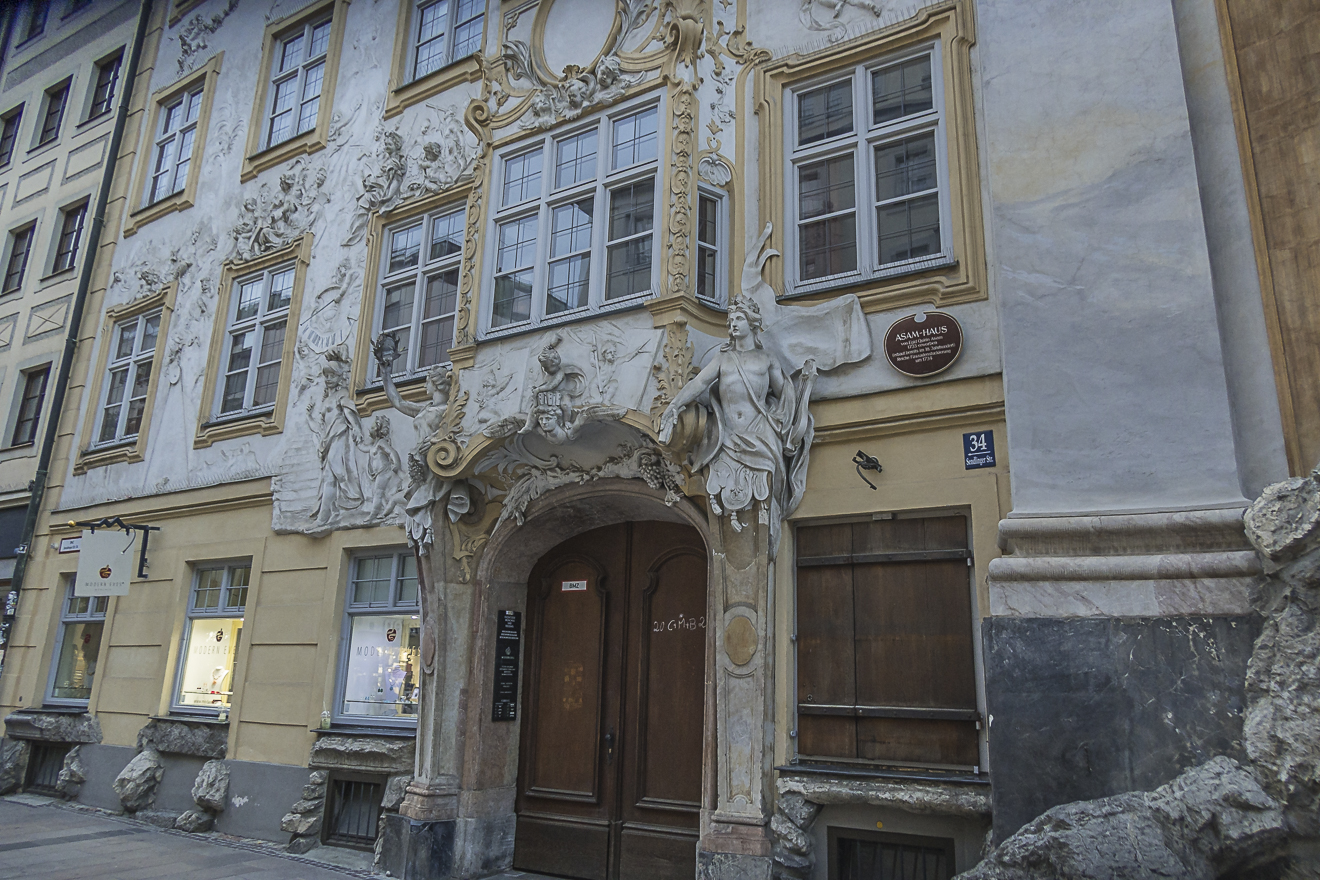 Back in Munich with the wonderful houses and architecture.[/caption]
[caption id="attachment_10028" align="alignnone" width="600"]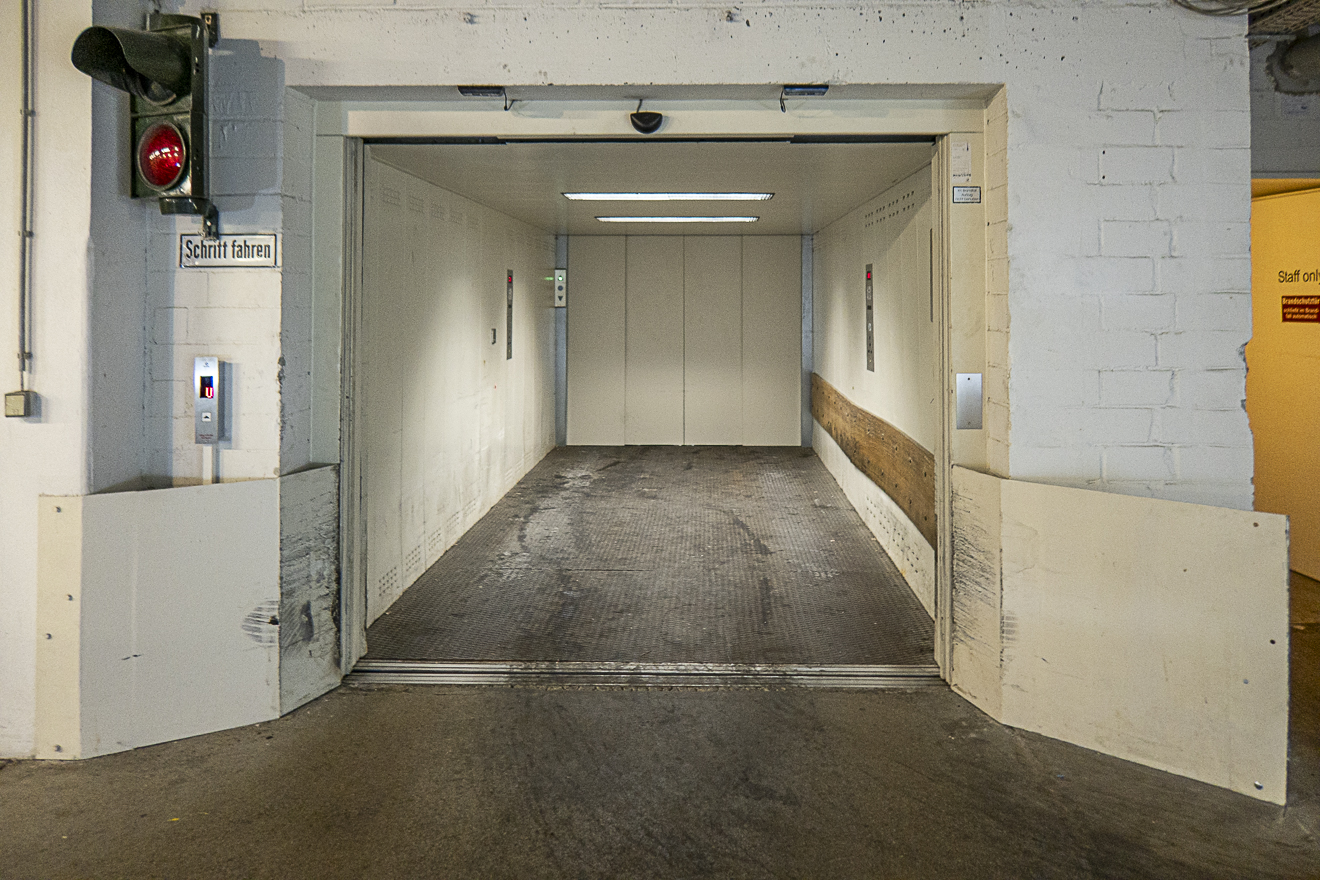 It is nice to be back in Europe and drive smaller cars. You find out immediately when you park at your first hotel after arrival[/caption]
[caption id="attachment_10029" align="alignnone" width="600"]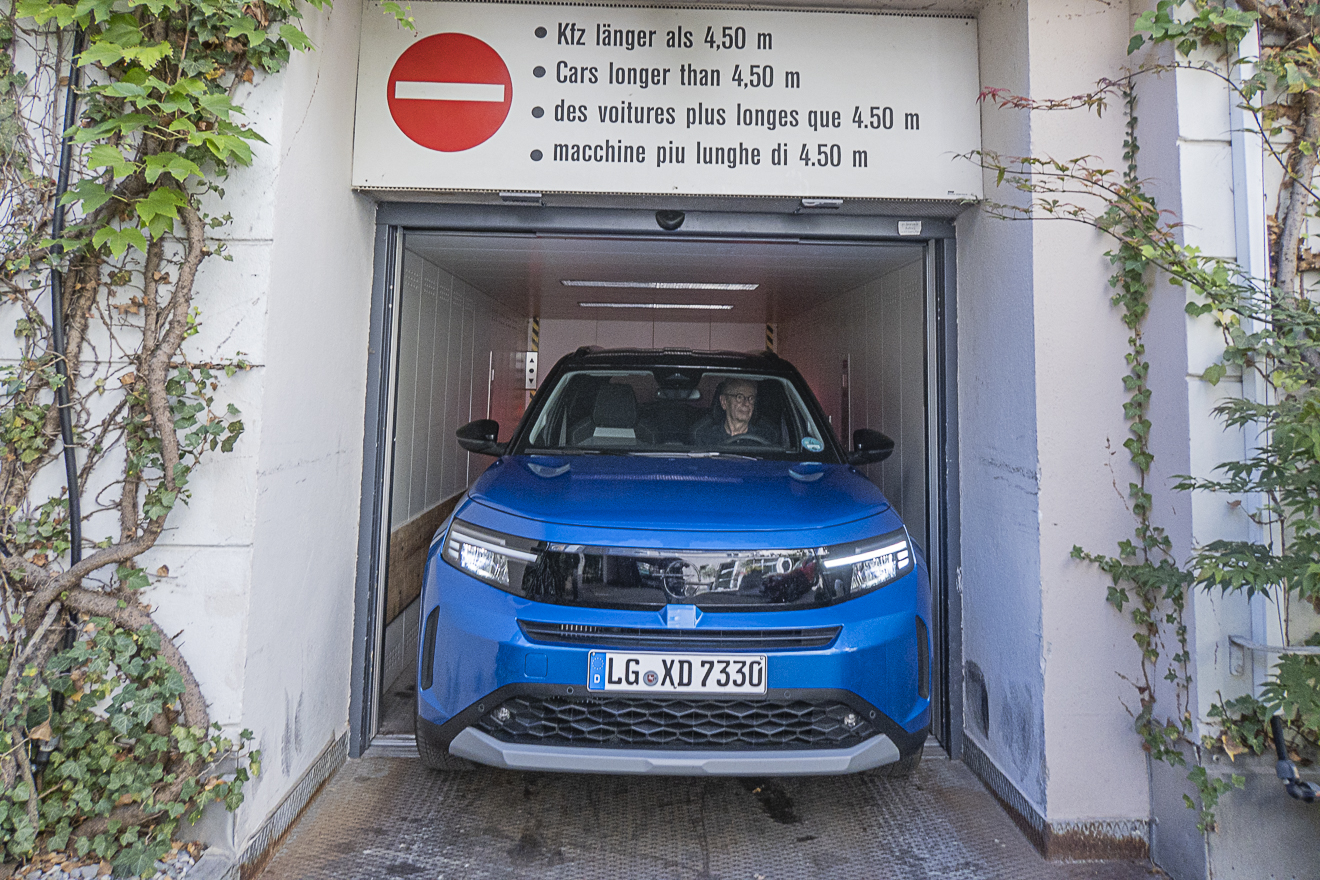 Makes me smile.[/caption]
[caption id="attachment_10058" align="alignnone" width="536"]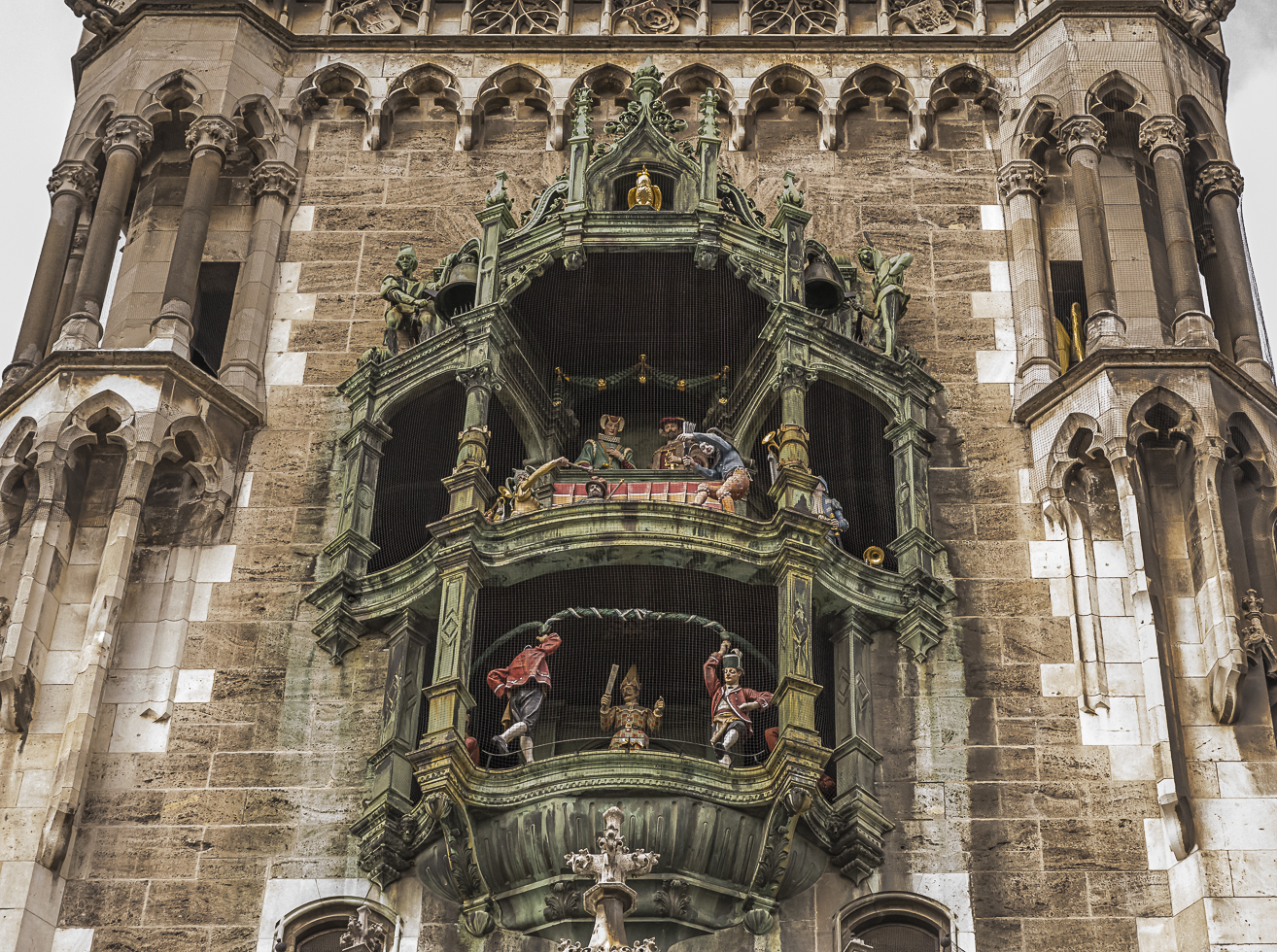 The famous Glockenspiel.[/caption]
[caption id="attachment_10051" align="alignnone" width="600"]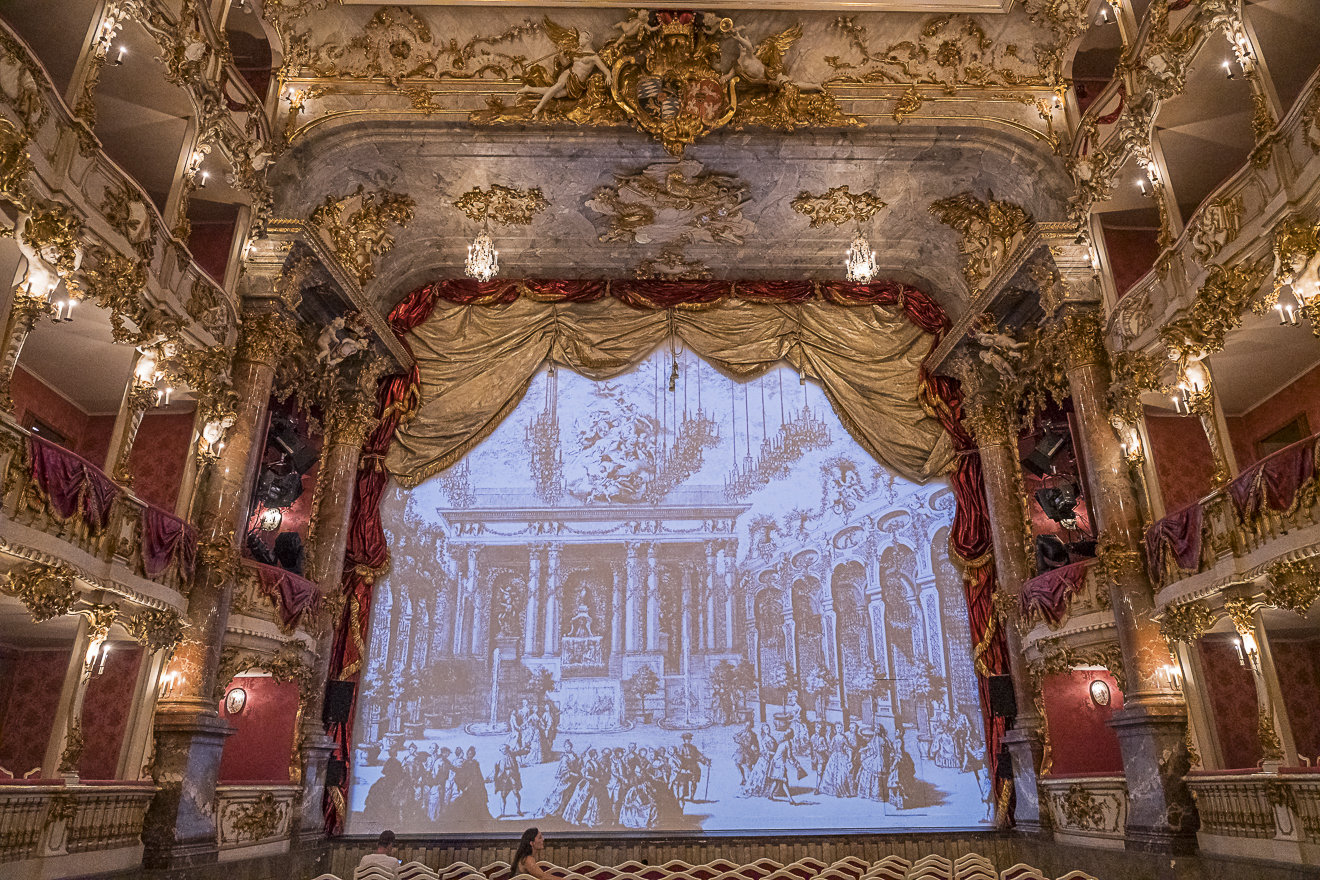 The incredible Cuvilliéstheater.[/caption]
[caption id="attachment_10047" align="alignnone" width="600"]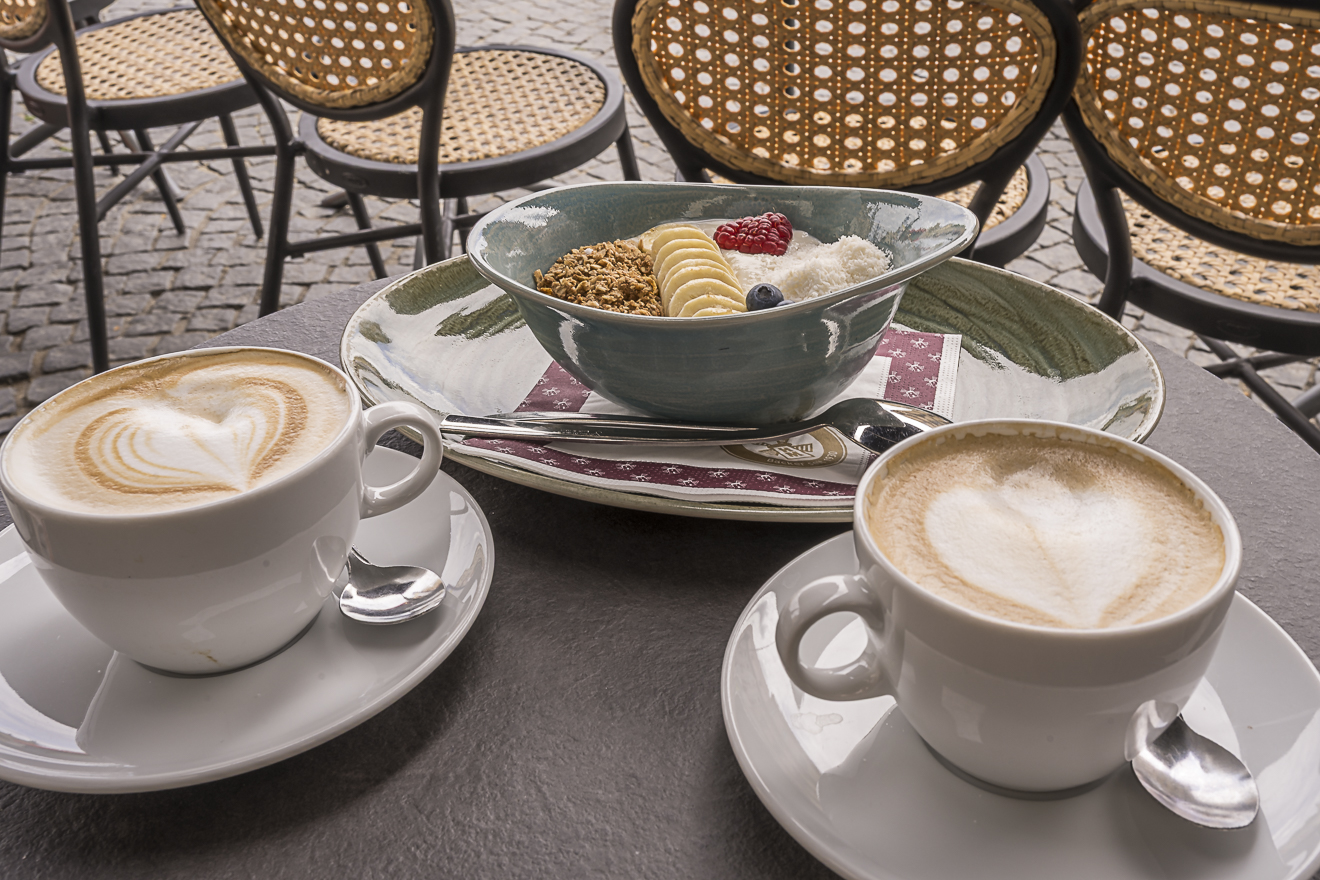 A healthy lunch with delicious coffee[/caption]
[caption id="attachment_10053" align="alignnone" width="600"] The Hofbräuhaus needs no introduction.[/caption]
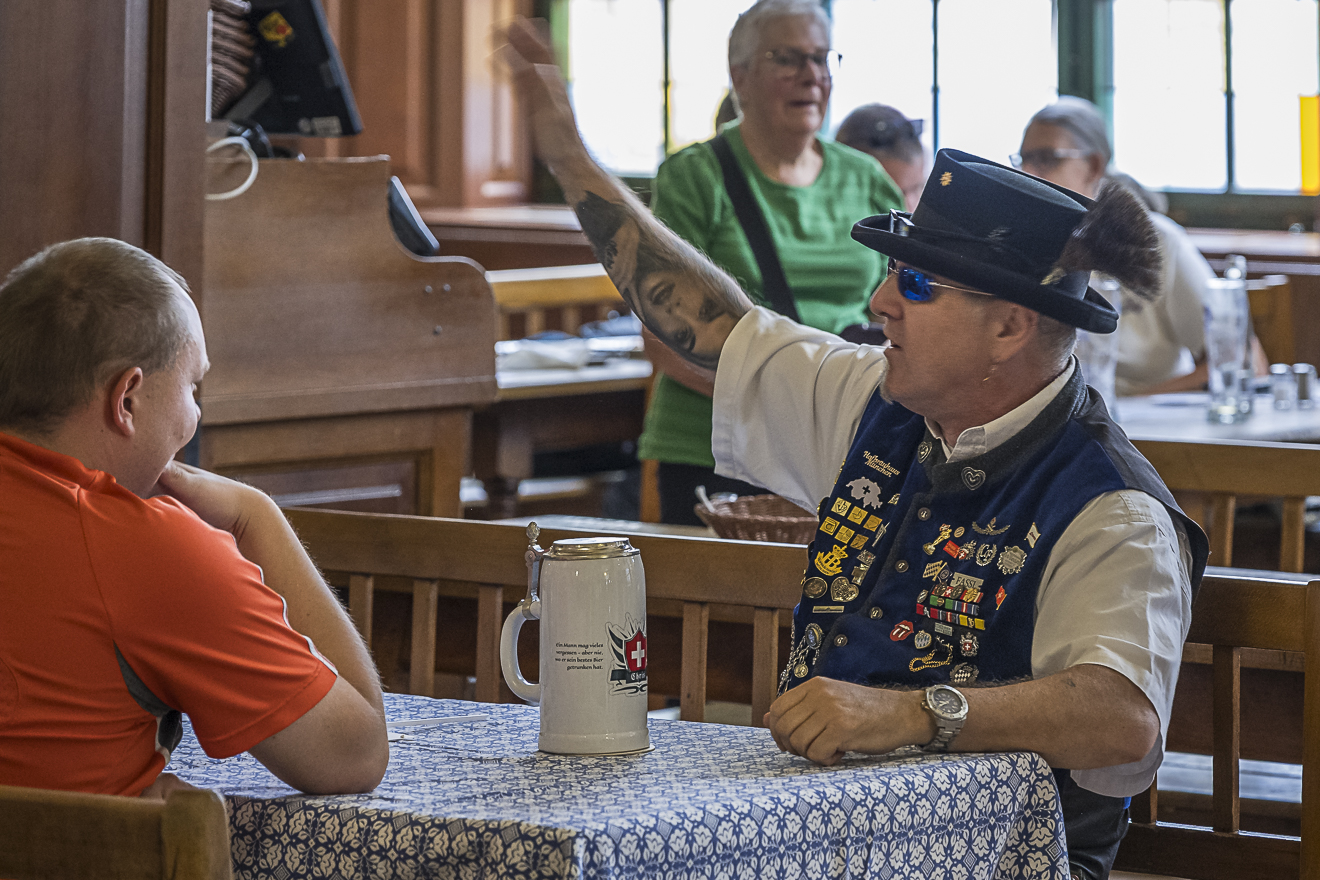
[caption id="attachment_10055" align="alignnone" width="600"]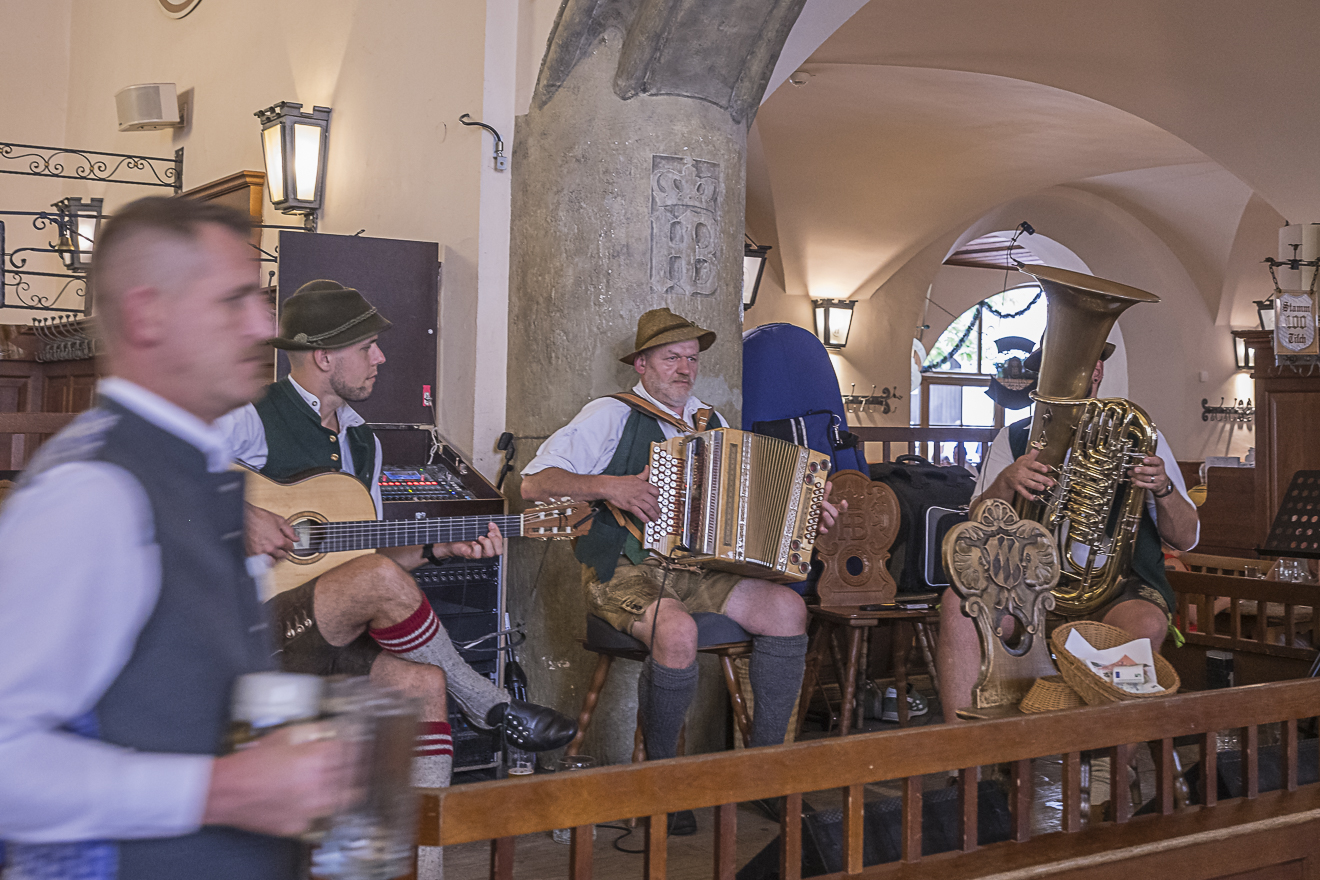 Lüpfige (lively) Folks Music[/caption]
[caption id="attachment_10056" align="alignnone" width="600"] A rare sight: Cindy carrying two beer steins.[/caption]
[caption id="attachment_10067" align="alignnone" width="300"]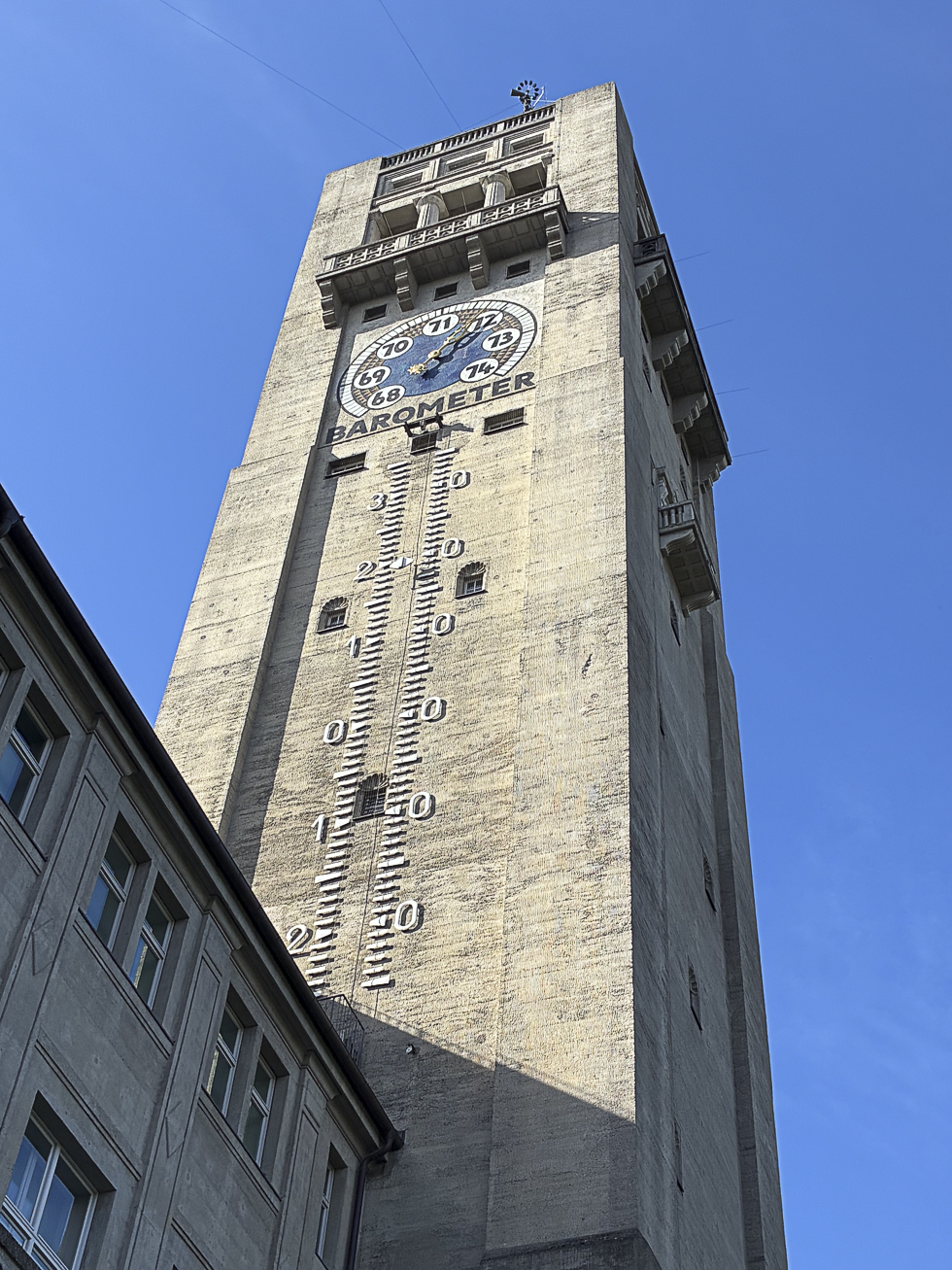 The entrance tower to the Deutsches Museum.[/caption]
[caption id="attachment_10060" align="alignnone" width="600"]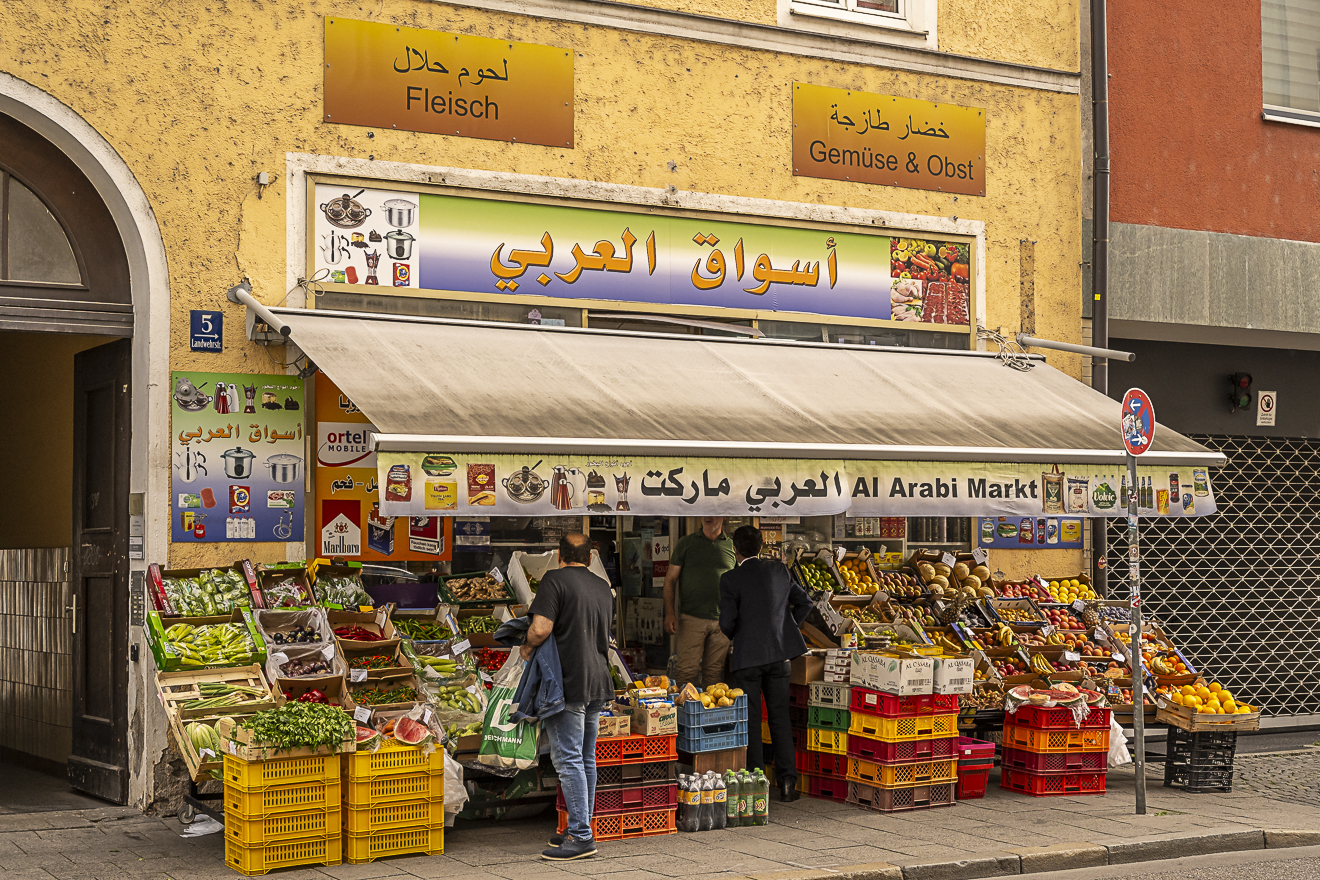 On our street where the Hotel is, we have lots of Middle Eastern restaurants, and groceries stores …[/caption]
[caption id="attachment_10027" align="alignnone" width="600"]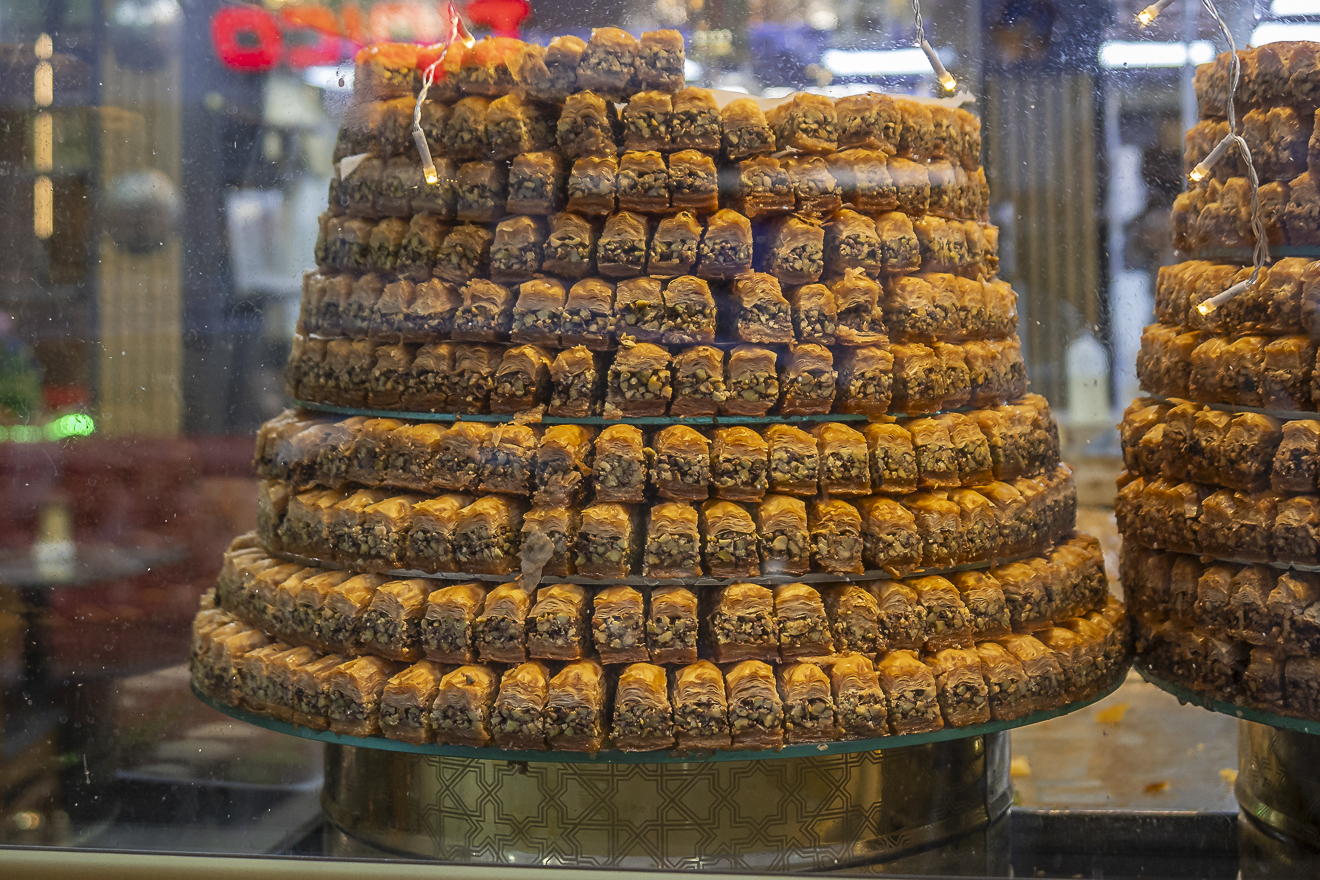 … with incredible delicious Turkish Baklava[/caption]
[caption id="attachment_10062" align="alignnone" width="600"]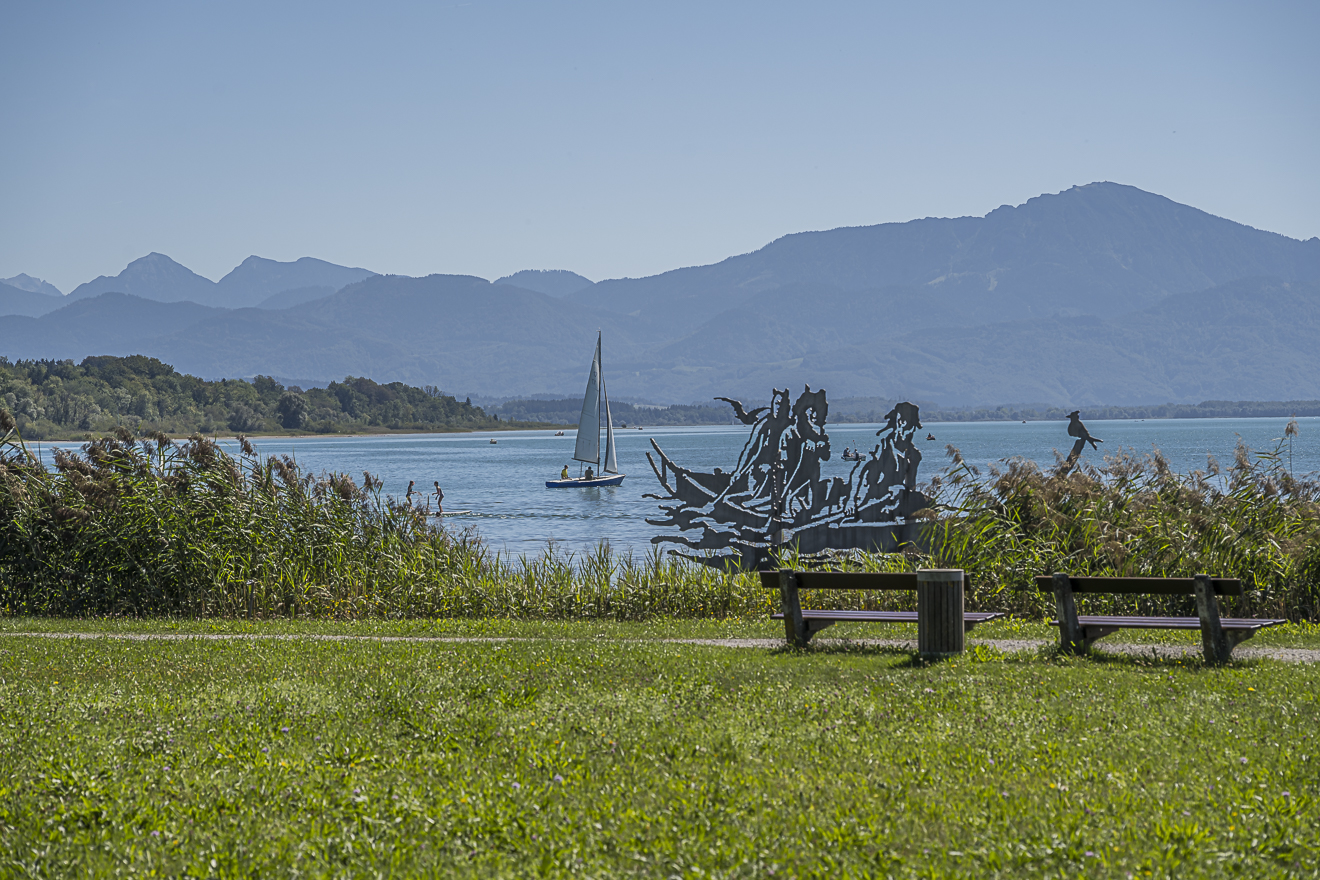 Peaceful moment at Chiemsee[/caption]
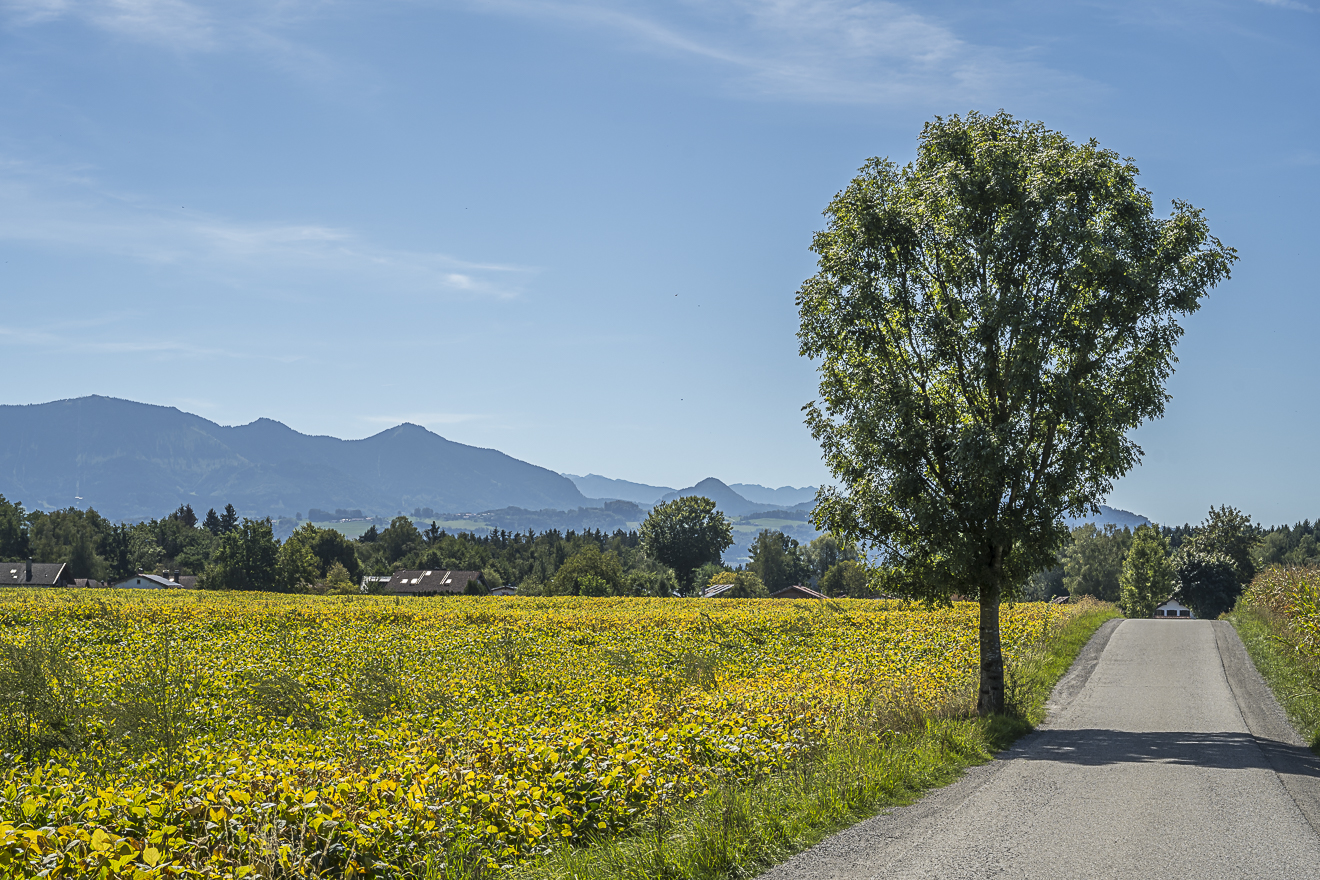
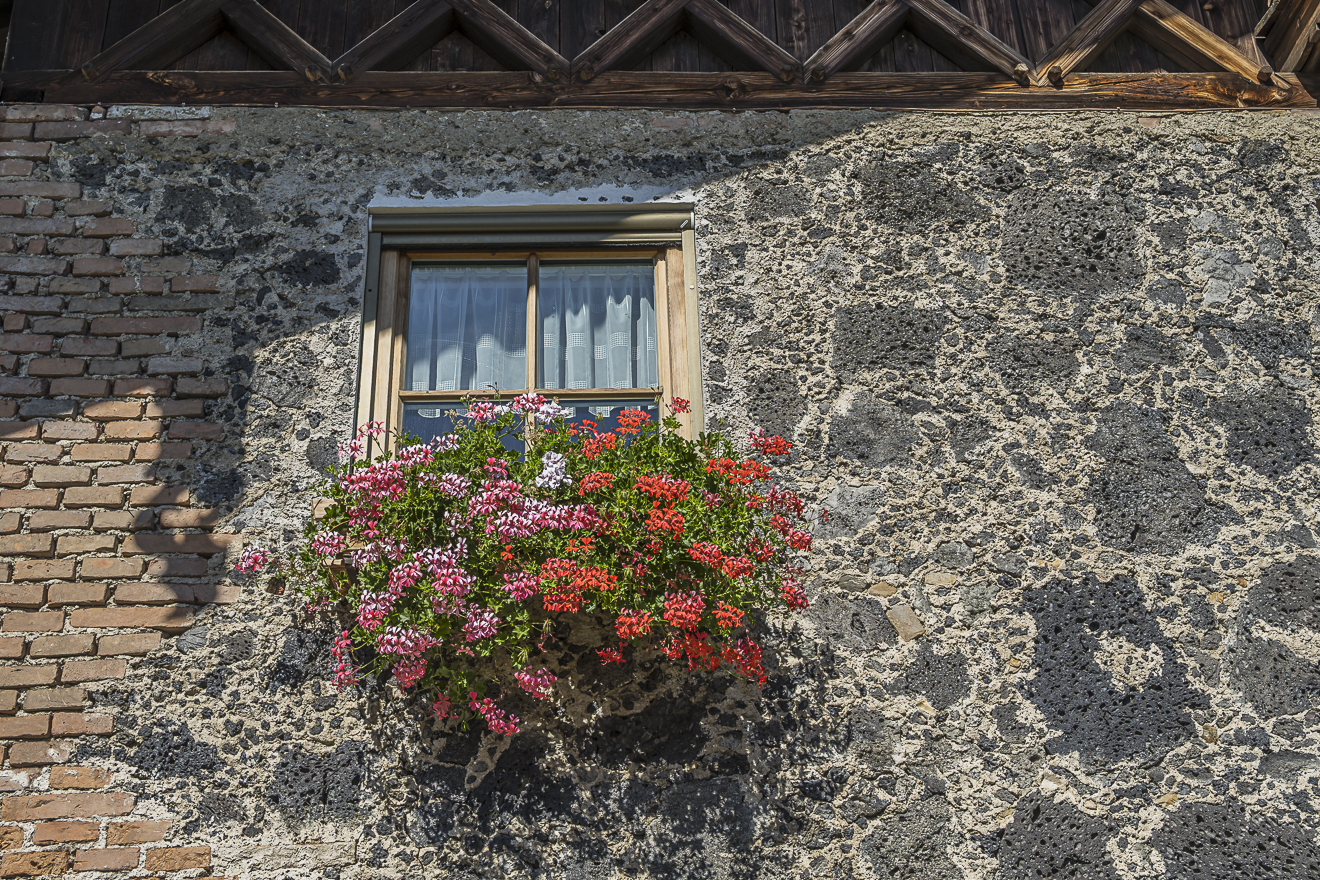
[caption id="attachment_10063" align="alignnone" width="600"]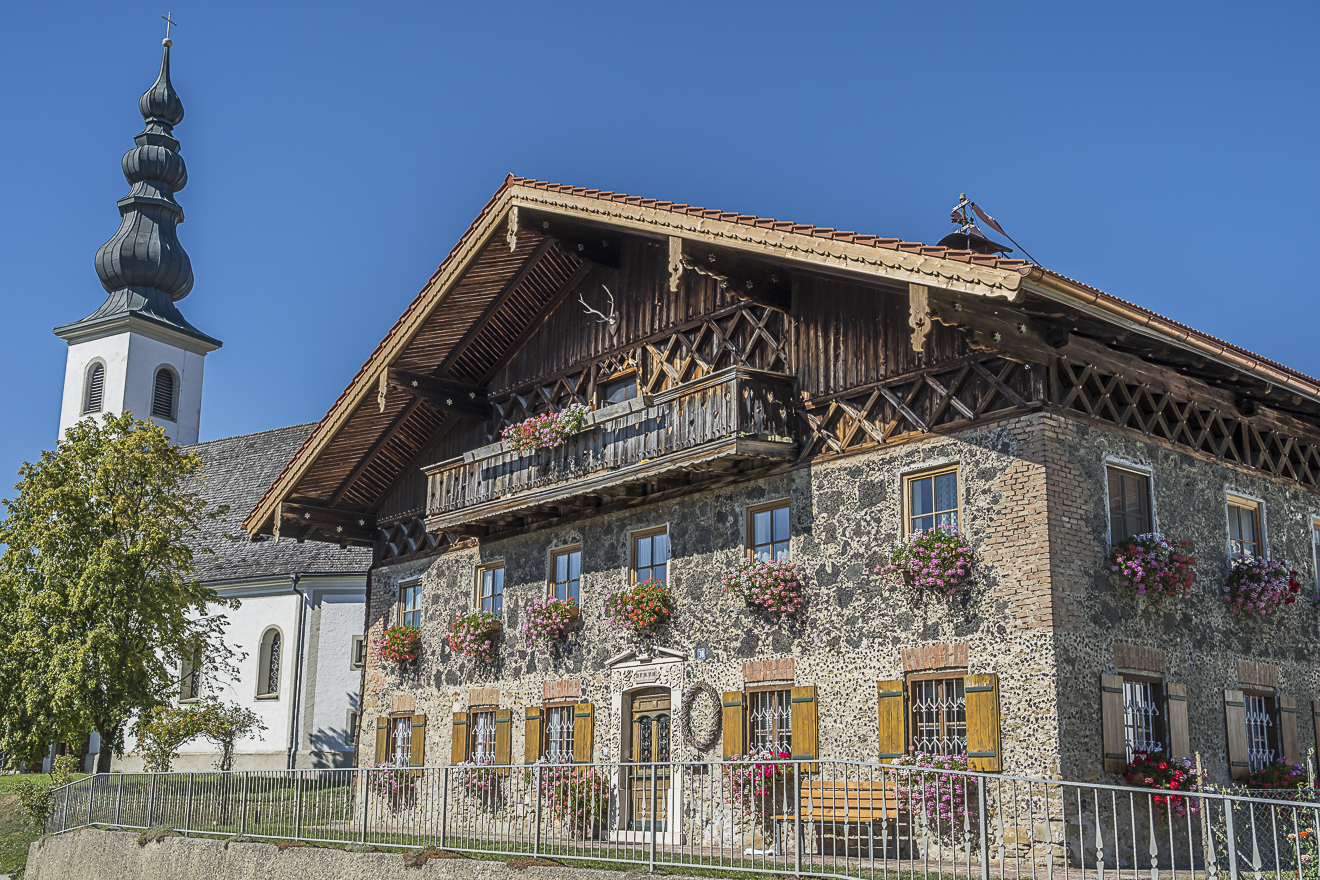 Love for beauty, love for details.[/caption]
[caption id="attachment_10068" align="alignnone" width="600"]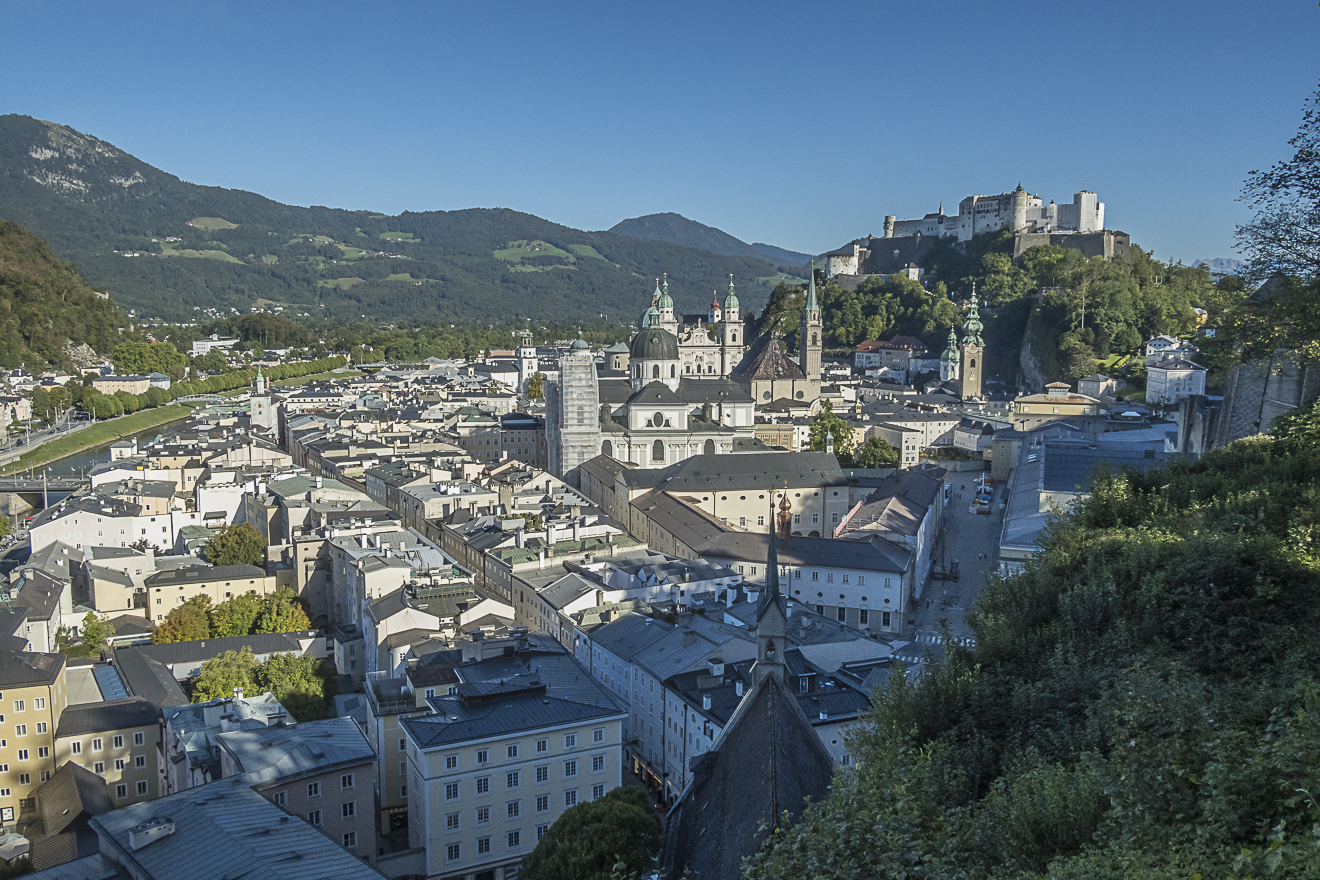 We arrived at the birthplace of Wolfgang Amadeus Mozart[/caption]
[caption id="attachment_10031" align="alignnone" width="267"] Mozart was born in this house in 1756 (270 years ago)[/caption]
[caption id="attachment_10032" align="alignnone" width="267"]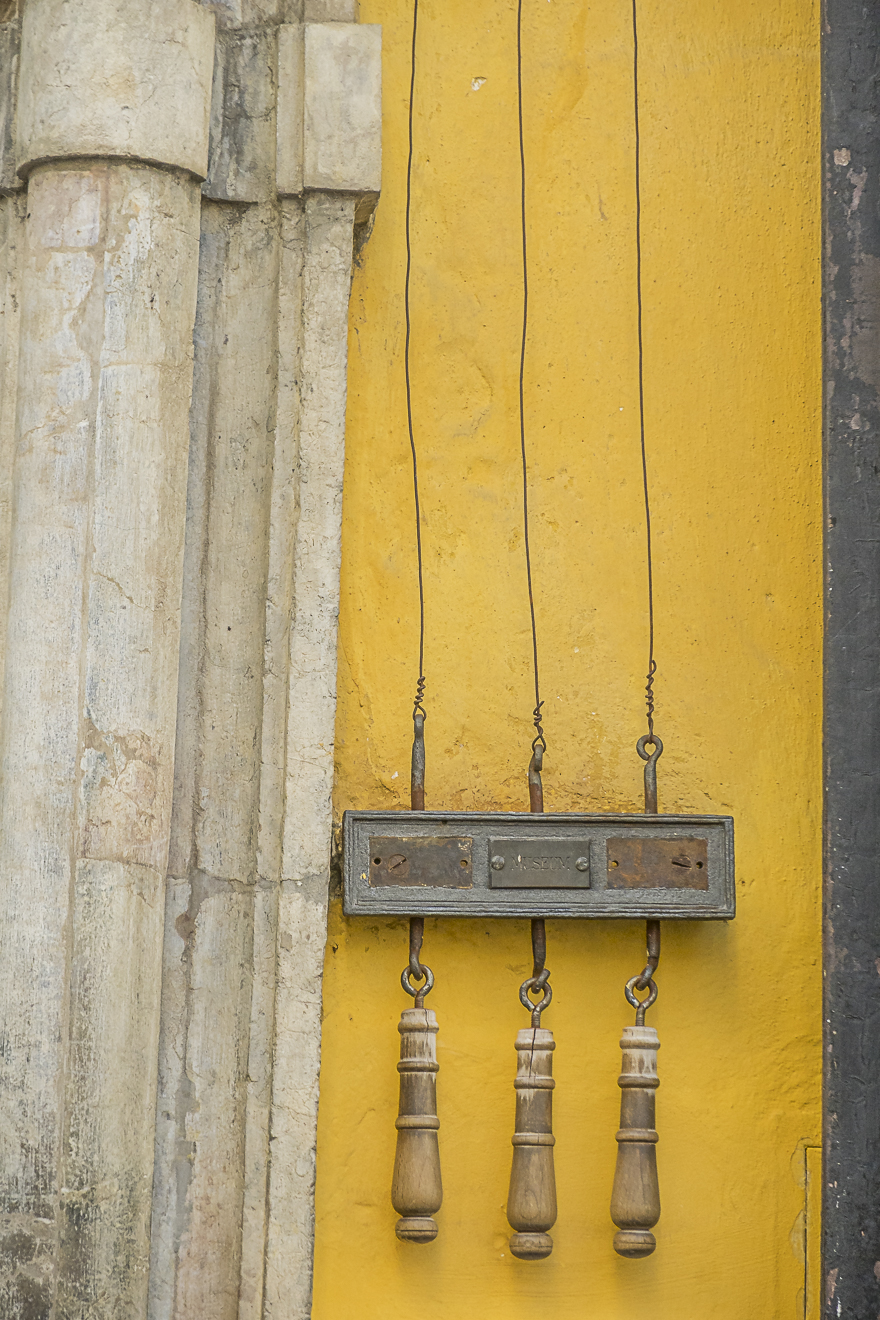 I love the creativity. Each family had their own door bell.[/caption]
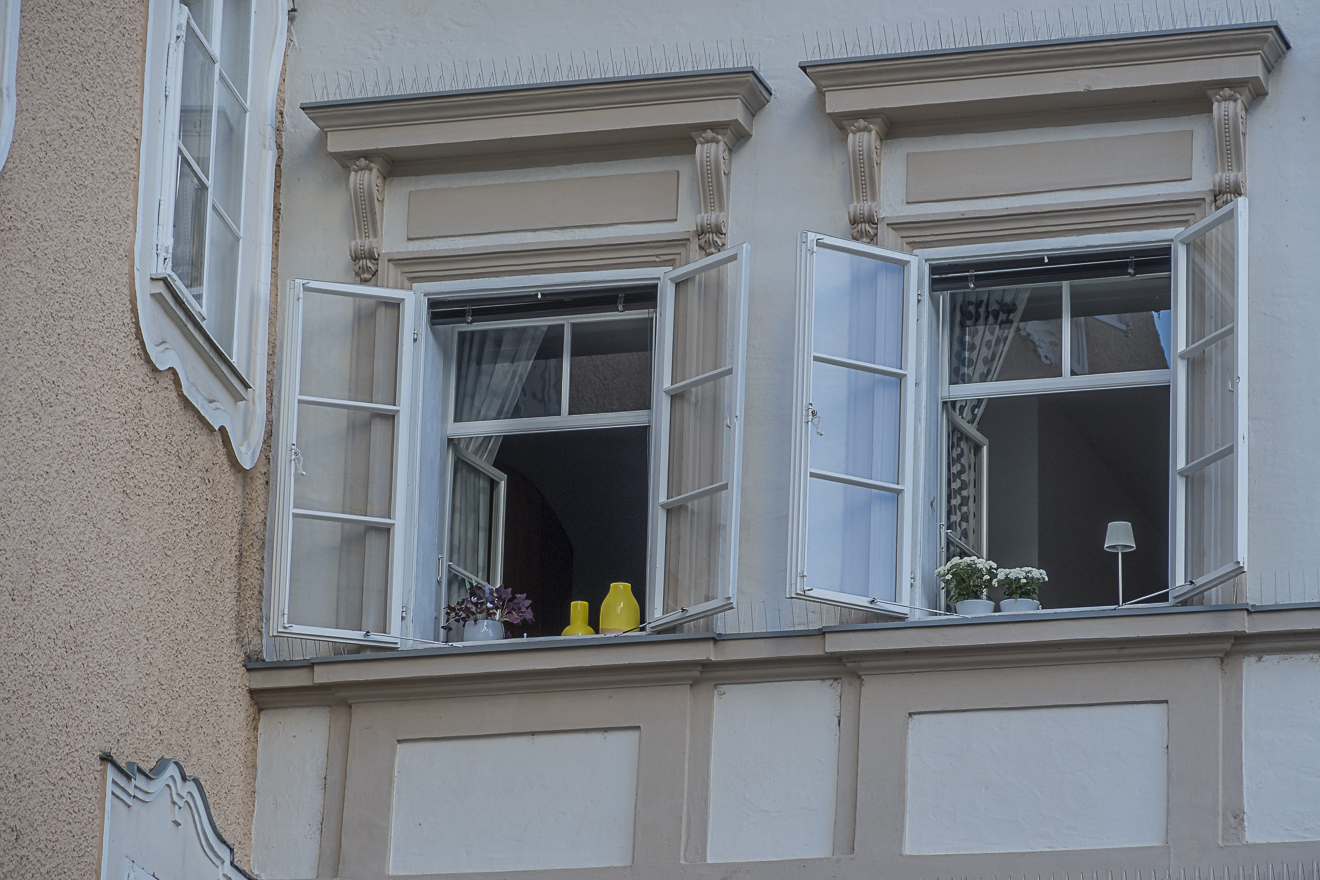
[caption id="attachment_10034" align="alignnone" width="600"] I bet this room looks cozy inside as well.[/caption]
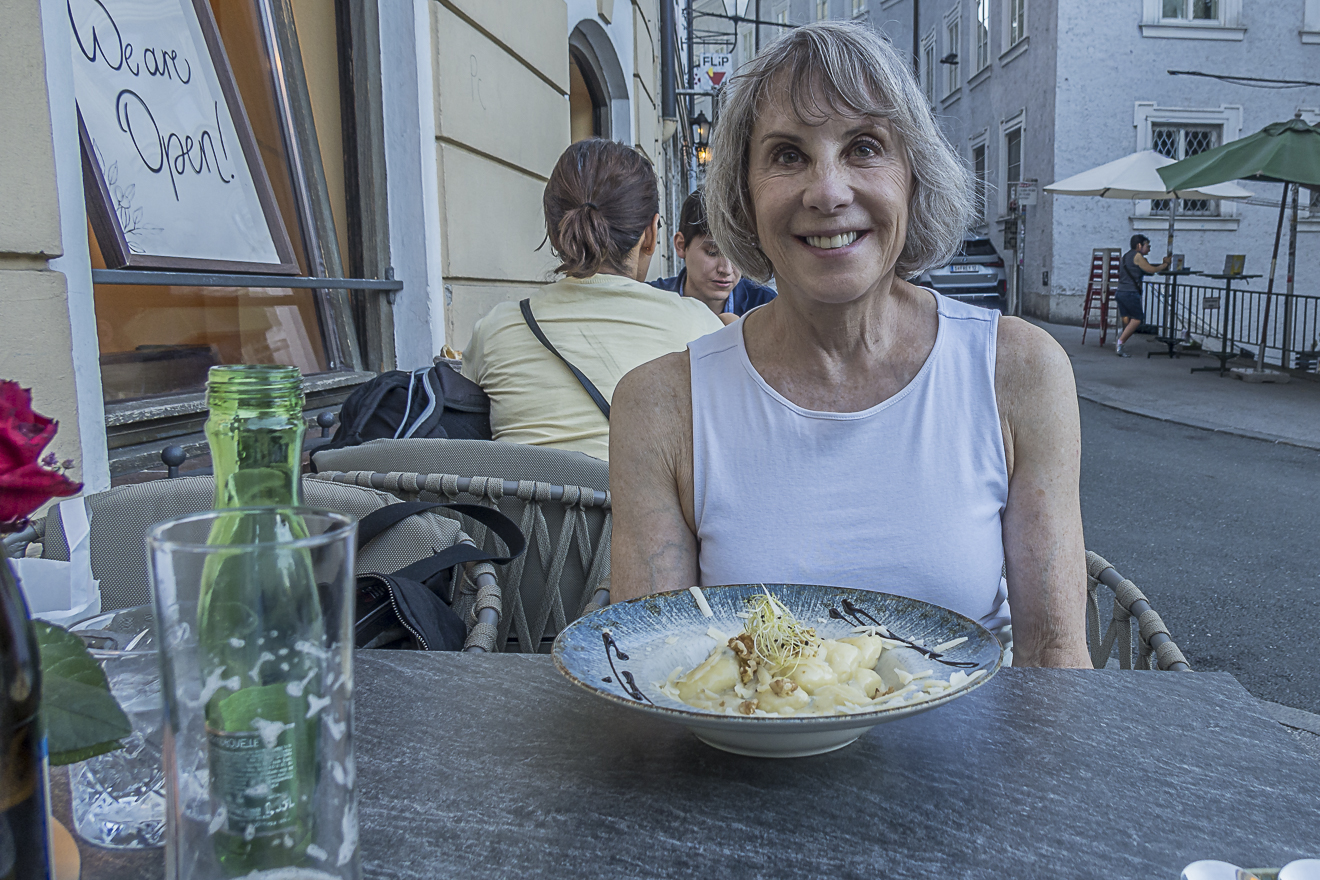
[caption id="attachment_10036" align="alignnone" width="600"]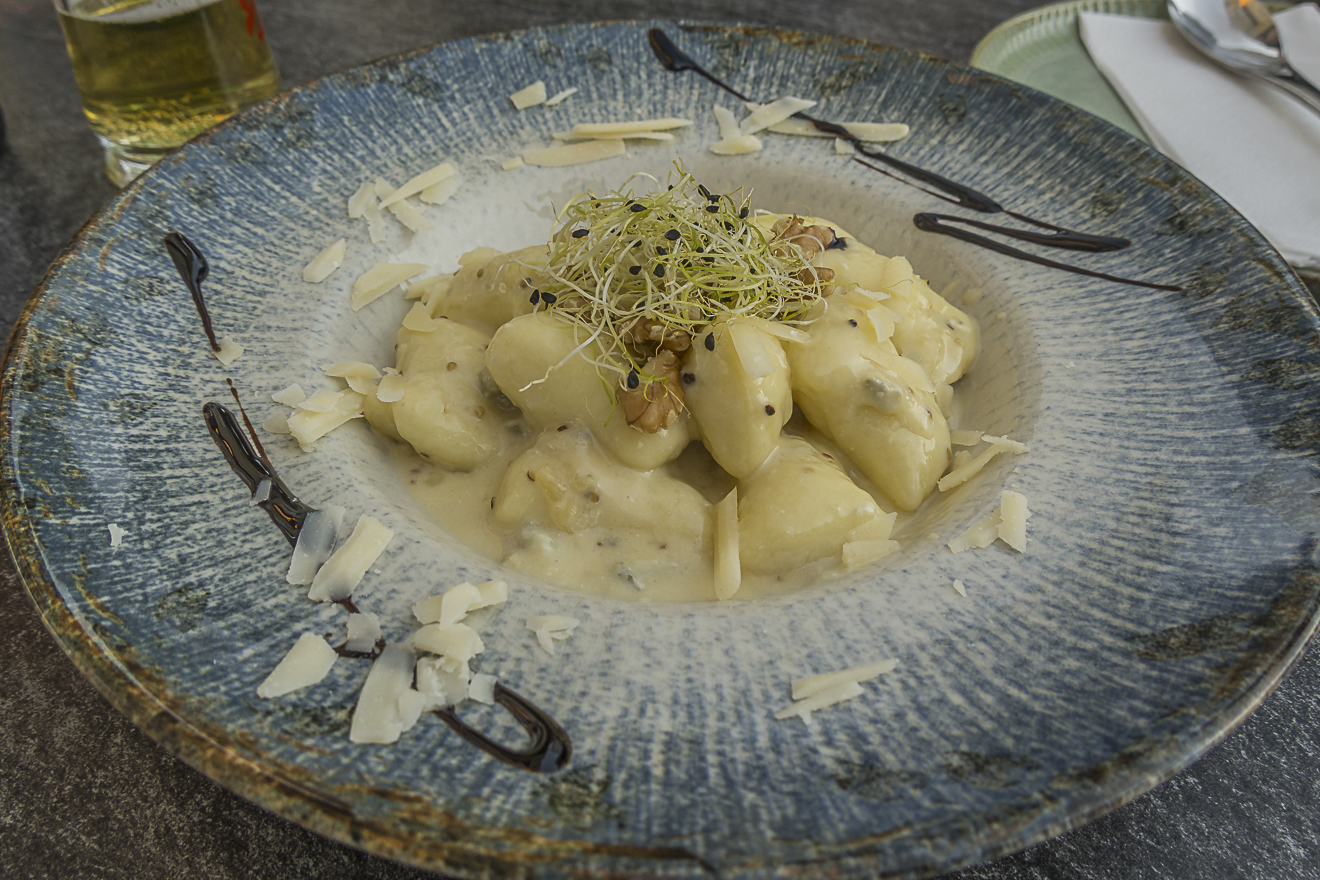 Lovely presentation, mouthwatering taste, and perfect portion.[/caption]
[caption id="attachment_10037" align="alignnone" width="600"]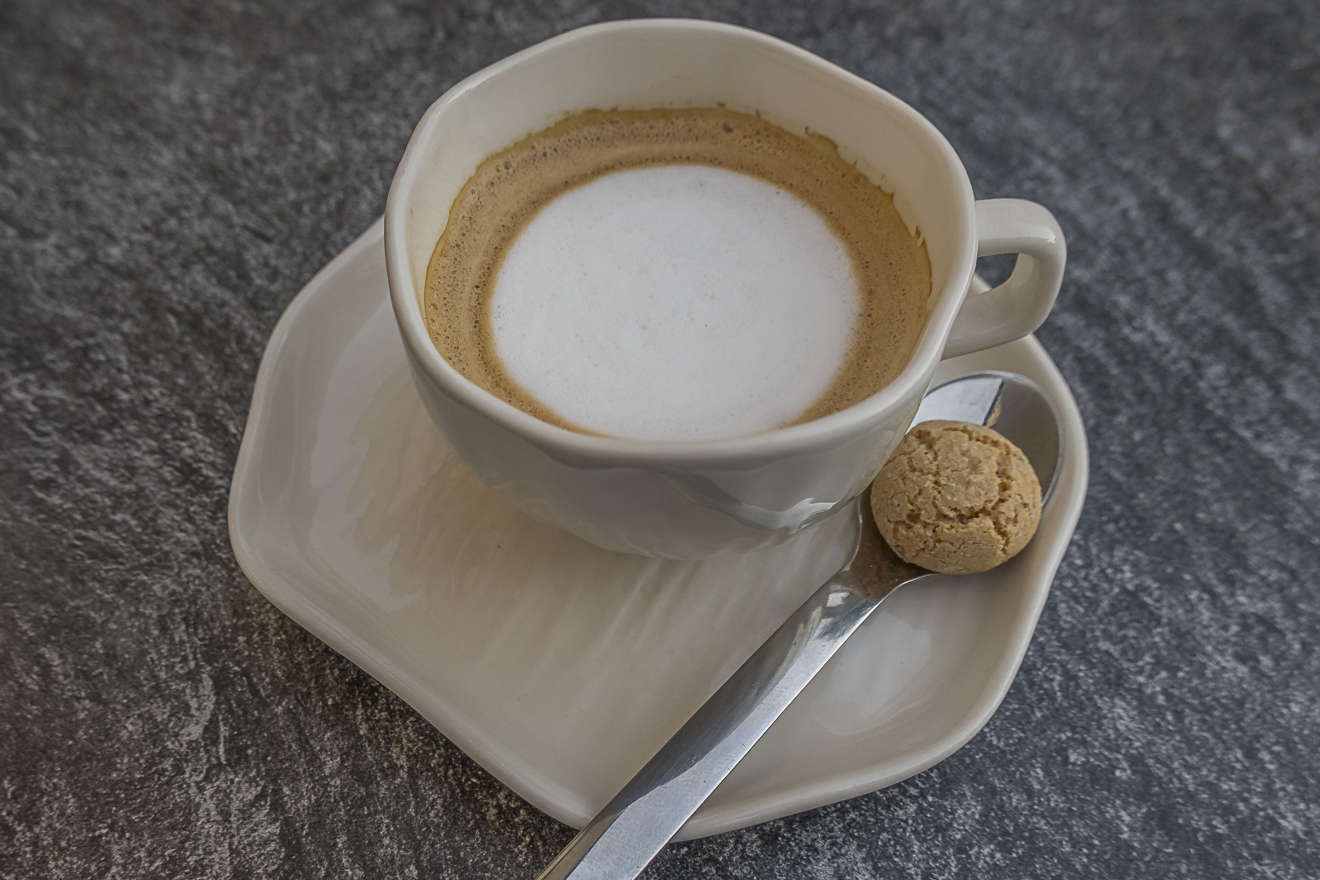 one of our countless Espresso Macchiato[/caption]
[caption id="attachment_10038" align="alignnone" width="600"] On our way back to the hotel. Salzburg in the evening light.[/caption]
[caption id="attachment_10039" align="alignnone" width="600"] High above the town, it’s easy to sleep well.[/caption]
Would you like to share your thoughts?